classroom strategies

Adult and toddler with autism using communication strategies together at home
Teacher Tips

6 Ways to Help a Toddler with Autism Communicate: The Full Guide

If your toddler has autism and isn’t talking yet — or has just a few words — it can be hard to know where to start. The good news: some of the most effective strategies are simple, everyday habits that both parents and teachers can use, backed by research. Here’s the full series, all in

6 Ways to Help a Toddler with Autism Communicate: The Full Guide Read Post »

Adult warmly modeling a word back to a toddler with autism playing with a ball
Teacher Tips

Model, Don’t Correct: A Communication Strategy for Toddlers with Autism

If a toddler says “ba” for ball, the instinct is often to correct it: “No, say ball.” It comes from a good place — you want them to get it right. But for a toddler just starting to talk, that correction often does more harm than good. Why It Works Correcting a toddler’s attempt can

Model, Don’t Correct: A Communication Strategy for Toddlers with Autism Read Post »

Adult patiently waiting for a toddler with autism to respond after being offered a choice
Teacher Tips

Wait Five Extra Seconds: A Communication Strategy for Toddlers with Autism

When you ask a toddler a question or model a word, it’s natural to jump in and fill the silence within a second or two. But for a toddler with autism, that quick silence isn’t empty — it’s often exactly when they’re processing what you said. Why It Works Toddlers with autism frequently need more

Wait Five Extra Seconds: A Communication Strategy for Toddlers with Autism Read Post »

Adult and toddler with autism building language during snack time at the kitchen table
Teacher Tips

Build Language Into Everyday Routines: A Communication Strategy for Toddlers with Autism

You don’t need a “lesson plan” to build a toddler’s communication skills. Some of the strongest research-backed strategies don’t happen at a table with flashcards at all — they happen during snack time, bath time, and getting dressed. Why It Works Naturalistic intervention — teaching communication inside ordinary play and daily routines, instead of isolated

Build Language Into Everyday Routines: A Communication Strategy for Toddlers with Autism Read Post »

Talk with Them Not at Them Autism
Teacher Tips

Talk With Them, Not At Them: A Communication Strategy for Toddlers with Autism

Many well-meaning adults fill silence with questions: “What’s this? What color is it? Can you say ball?” For a toddler with autism who isn’t talking yet, this can feel like pressure — and it often shuts communication down instead of opening it up. There’s a simpler approach with just as much research behind it: narrate

Talk With Them, Not At Them: A Communication Strategy for Toddlers with Autism Read Post »

Adult joining a toddler with autism in play by following the child's focus on stacking blocks
Teacher Tips

Follow Their Lead: A Simple Way to Build Communication with Toddlers with Autism

When a toddler with autism isn’t talking yet, the instinct is often to redirect them — point to what you want them to look at, hold up a flashcard, ask them to repeat a word. It makes sense. But it usually backfires. The strategy with the strongest research behind it works the opposite way: get

Follow Their Lead: A Simple Way to Build Communication with Toddlers with Autism Read Post »

Toddler with autism handing a picture card to an adult to communicate
Teacher Tips

Give Them a Way to “Talk” Before They Have Words: AAC for Toddlers with Autism

One of the most common fears parents and teachers share about a nonverbal toddler with autism is this: “If I give her pictures or sign language, will she ever talk?” The research says the opposite is true. Why It Works Augmentative and Alternative Communication (AAC) — things like picture cards, sign language, or a simple

Give Them a Way to “Talk” Before They Have Words: AAC for Toddlers with Autism Read Post »

ADHD Supports for Students
Teacher Tips

Support & Strategies for Students with ADHD: A Teacher’s Quick-Reference Guide

Supporting a student with ADHD well isn’t about one big fix — it’s usually a handful of small, consistent strategies working together. The right combination varies by student, but most effective approaches fall into five areas: structure, organization, academic accommodations, active engagement, and emotional support. Here’s a quick-reference breakdown of each, with practical strategies you

Support & Strategies for Students with ADHD: A Teacher’s Quick-Reference Guide Read Post »

Teacher Tips

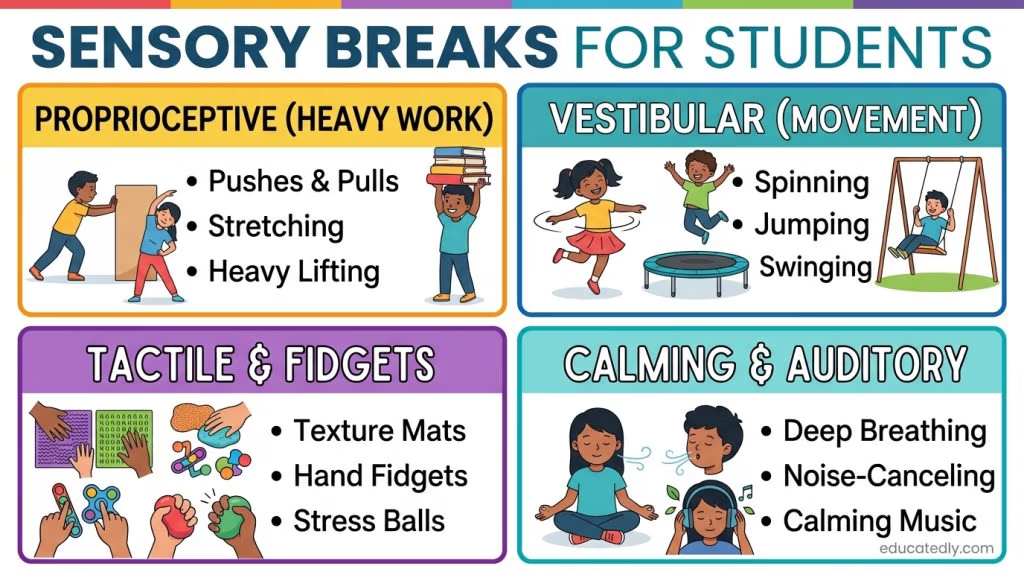
5 Quick Sensory Breaks to Help Students Stay Calm, Focused, and Ready to Learn

Every teacher knows the sign: students squirming in their seats, staring blankly out the window, or becoming easily frustrated by simple tasks. When young minds hit sensory overload, continuing to push through academic instruction rarely works. Sensory breaks—short, deliberate activities designed to help children regulate their nervous systems—are one of the most effective tools for

5 Quick Sensory Breaks to Help Students Stay Calm, Focused, and Ready to Learn Read Post »

Scroll to Top