You don’t need a “lesson plan” to build a toddler’s communication skills. Some of the strongest research-backed strategies don’t happen at a table with flashcards at all — they happen during snack time, bath time, and getting dressed.
Why It Works
Naturalistic intervention — teaching communication inside ordinary play and daily routines, instead of isolated drills — is one of the practices identified as having strong evidence for building communication skills in young autistic children. Routines work well because they repeat every day, which means a toddler hears the same words, in the same context, over and over — exactly the kind of repetition that helps new words stick.
How to Use It
Pick two or three routines you already do every day, and attach a few simple words to them.
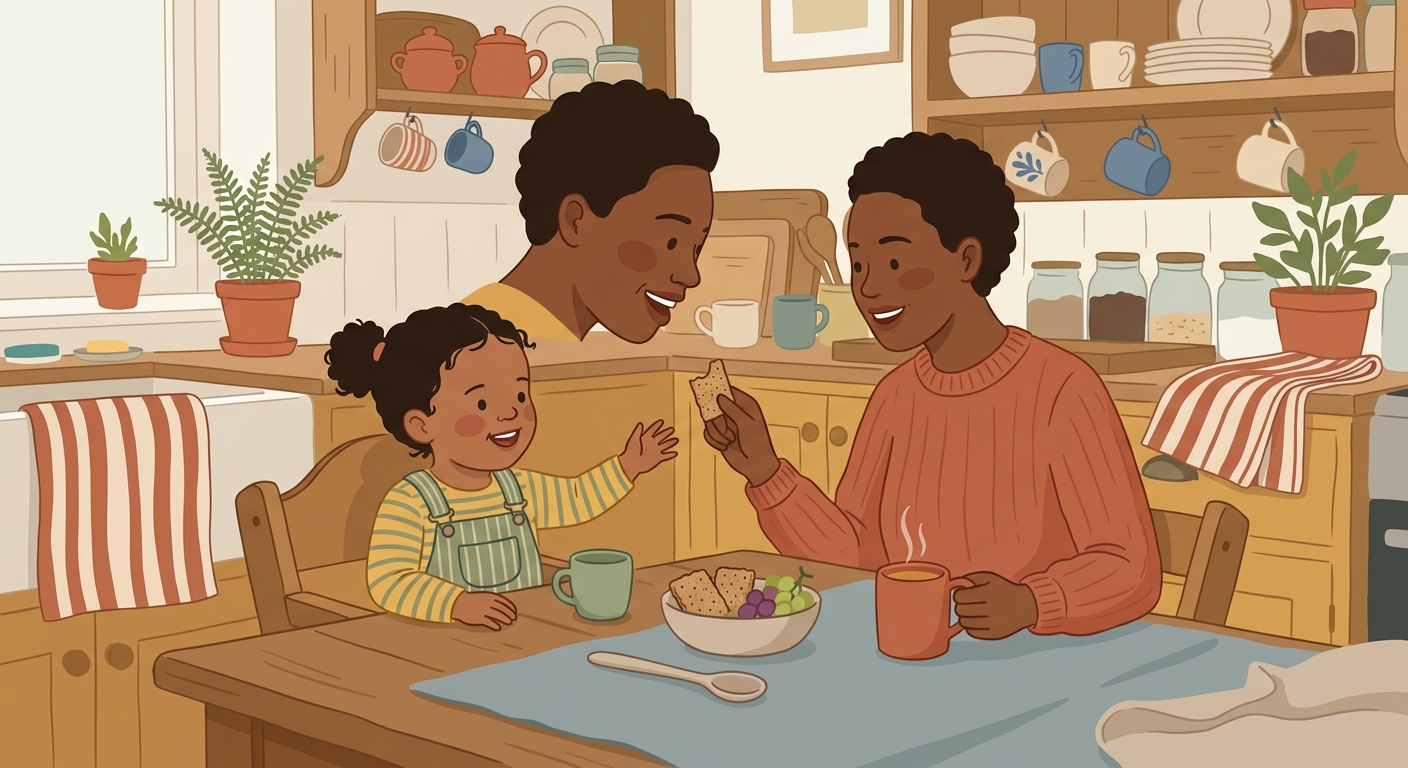
- Snack time: Offer a small piece, wait, then label it: “Cracker.” Offer a choice: “Cracker or grape?”
- Bath time: Narrate the actions: “Splash! Wash tummy.”
- Getting dressed: “Shoes on! One shoe, two shoes.”
- Cleanup: “In the bin. All done!”
You’re not adding extra work to your day — you’re just narrating what’s already happening.
A Few Tips
- Pick routines that repeat daily. The more often it happens, the more chances a toddler gets to hear and eventually use the words.
- Use the same words each time. Consistency matters more than variety at this stage.
- Keep phrases short. One to three words is easier to absorb than a full sentence.
- Let the routine do the teaching. You don’t need a formal “session” — the moment itself is the lesson.
For Students with IEPs or Speech Goals
Ask the classroom SLP or early intervention team which routines they’re already using to target communication goals, and mirror those same routines and words at home. A shared morning routine (like arrival or snack) is often an easy place for teachers and parents to stay consistent with each other.
The Bottom Line
Building language into routines you’re already doing costs no extra time and gives a toddler daily, predictable chances to connect words to meaning. The lesson is already built into the day — you just have to narrate it.
Based on the National Clearinghouse on Autism Evidence and Practice’s 2020 review, which identifies naturalistic intervention as an evidence-based practice for building communication skills in young autistic children.