When you ask a toddler a question or model a word, it’s natural to jump in and fill the silence within a second or two. But for a toddler with autism, that quick silence isn’t empty — it’s often exactly when they’re processing what you said.
Why It Works
Toddlers with autism frequently need more time to process language and plan a response than adults expect. Adults tend to fill that gap almost automatically — answering for the child, repeating the question, or moving on — which can accidentally take away the child’s chance to respond at all. This technique, often called “expectant waiting,” is built into several parent-coaching programs with research support, including Hanen’s More Than Words, which a randomized controlled trial found improved parent responsiveness and toddlers’ communication skills.
How to Use It
After you say something to a toddler — a word, a simple question, an invitation to play — pause and silently count to five before doing anything else.
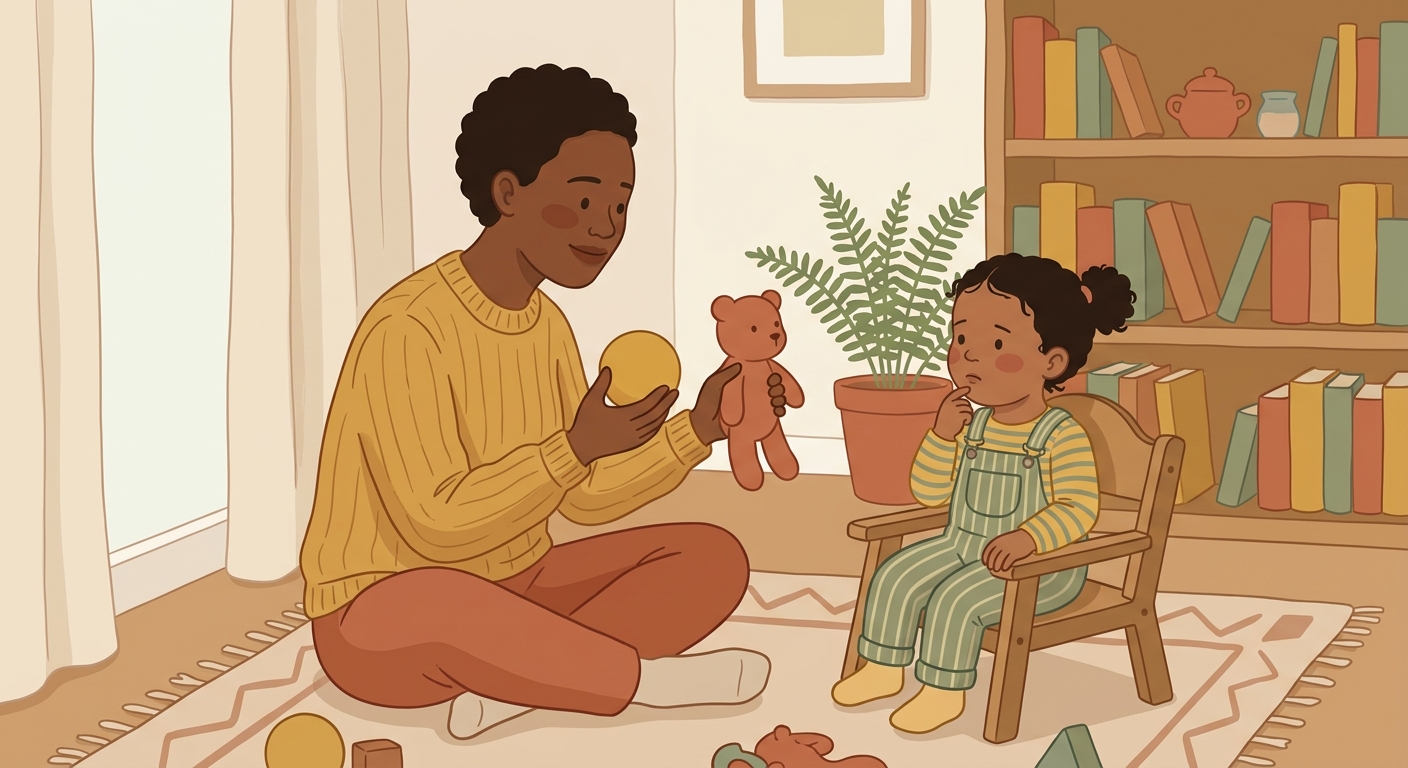
- Model a word (“Ball!”) — then wait, with an interested, expectant look on your face.
- Offer a choice (“Cracker or grape?”) — then wait, holding up both options.
- Hand over half of a favorite toy and pause before handing the rest.
- Notice any response as a win: a glance, a reach, a sound, a sign, or a word all count.
A Few Tips
- Keep your face warm and expectant, not blank. The pause should feel like an invitation, not a test.
- Resist repeating yourself right away. Repeating too quickly can retrain a child to wait for the repeat instead of responding the first time.
- Five seconds feels longer than it is. It helps to count silently in your head so you don’t rush it.
- Pair waiting with the strategies you’re already using — narrating, following their lead, and using pictures or signs all work even better with a pause built in.
For IEPs/Special Ed Context
Expectant waiting is often already part of a child’s speech-language or early intervention plan, sometimes called “wait time” or “pause and prompt.” Ask the SLP or classroom team how long they’re pausing and what response they’re watching for, so home and school stay consistent.
The Bottom Line
A few extra seconds of silence can feel awkward, but it’s often the exact window a toddler needs to respond. Slowing down gives them the room to try.
Based on a randomized controlled trial of Hanen’s “More Than Words” program (Carter et al., 2011), which found that training parents in responsive strategies, including expectant waiting, improved communication outcomes in toddlers with early autism symptoms.