If your toddler has autism and isn’t talking yet — or has just a few words — it can be hard to know where to start. The good news: some of the most effective strategies are simple, everyday habits that both parents and teachers can use, backed by research.
Here’s the full series, all in one place.
1. Give Them a Way to “Talk” Before They Have Words
Pictures, sign language, and AAC devices don’t delay speech — they support it. Giving a toddler a reliable way to be understood reduces frustration and creates more chances to connect words to meaning.
2. Follow Their Lead
Join whatever a toddler is already doing instead of redirecting them to something else. Connection comes before communication — a child has to want to share something with you before they’ll try to tell you about it.
3. Talk With Them, Not At Them
Narrate what’s happening instead of quizzing with questions. Describing the moment, out loud and pressure-free, surrounds a toddler with language tied to something real.
4. Build Language Into Everyday Routines
Snack time, bath time, and getting dressed are lessons in disguise. Attaching a few simple words to routines you already do gives a toddler daily, predictable chances to learn.
5. Wait Five Extra Seconds
A few extra seconds of silence after modeling a word or offering a choice gives a toddler the processing time they need to respond.
6. Model, Don’t Correct
Responding warmly to an attempt — instead of correcting it — keeps communication feeling safe and encourages a toddler to keep trying.
Bonus: Starting AAC at Age 3
If your child is a little older and you’re wondering whether it’s too late (or too early) to start AAC, this post walks through a simple first-steps plan.
The Bottom Line
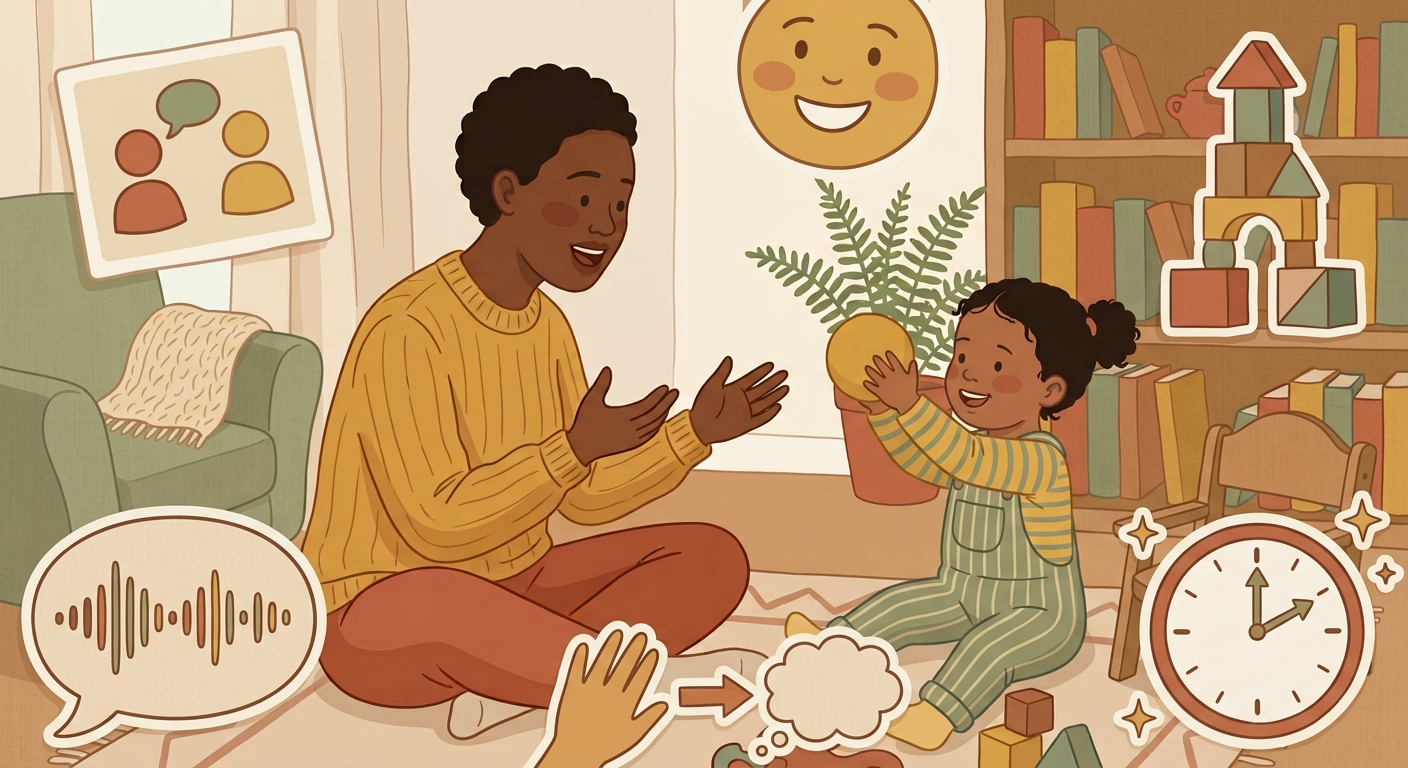
You don’t need special equipment or a therapy degree to help a toddler with autism build communication skills. Follow their lead, narrate instead of quiz, build language into routines you already have, give them a way to communicate before words come, wait a little longer than feels natural, and model instead of correct. These six habits, used consistently at home and school, are where real progress starts.
Want to build a custom set of picture cards to use with these strategies? Try our Core Vocabulary Board Builder — free and works for any age or stage.