
Teacher Tips

Practical strategies and classroom shortcuts you can use tomorrow — grading systems, time-savers, and small changes that make a real difference in day-to-day teaching.

Toddler with autism handing a picture card to an adult to communicate
Teacher Tips

Give Them a Way to “Talk” Before They Have Words: AAC for Toddlers with Autism

One of the most common fears parents and teachers share about a nonverbal toddler with autism is this: “If I give her pictures or sign language, will she ever talk?” The research says the opposite is true. Why It Works Augmentative and Alternative Communication (AAC) — things like picture cards, sign language, or a simple

Give Them a Way to “Talk” Before They Have Words: AAC for Toddlers with Autism Read Post »
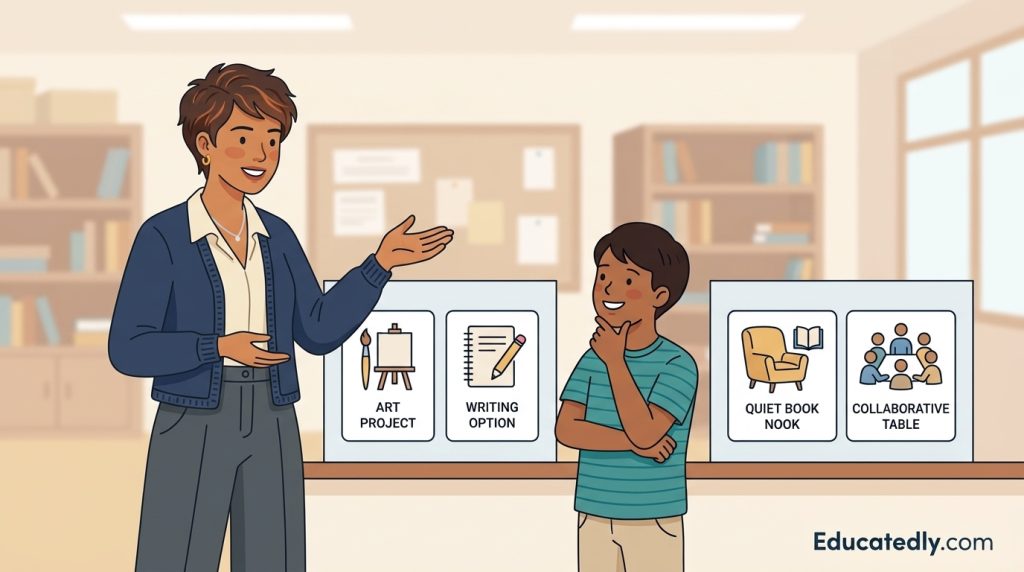
Teacher offering a student two classroom activity choices, illustrating a strategy for preventing power struggles
Teacher Tips

Offering Choices: A Simple Way to Prevent Power Struggles

One of the easiest tools for avoiding power struggles in the classroom is also one of the most overlooked: giving students a choice. Why It Works Most kids don’t fight because they refuse to do the work — they fight because they feel like they have no say in the matter. When a student is

Offering Choices: A Simple Way to Prevent Power Struggles Read Post »

ADHD Supports for Students
Teacher Tips

Support & Strategies for Students with ADHD: A Teacher’s Quick-Reference Guide

Supporting a student with ADHD well isn’t about one big fix — it’s usually a handful of small, consistent strategies working together. The right combination varies by student, but most effective approaches fall into five areas: structure, organization, academic accommodations, active engagement, and emotional support. Here’s a quick-reference breakdown of each, with practical strategies you

Support & Strategies for Students with ADHD: A Teacher’s Quick-Reference Guide Read Post »

Teacher Tips

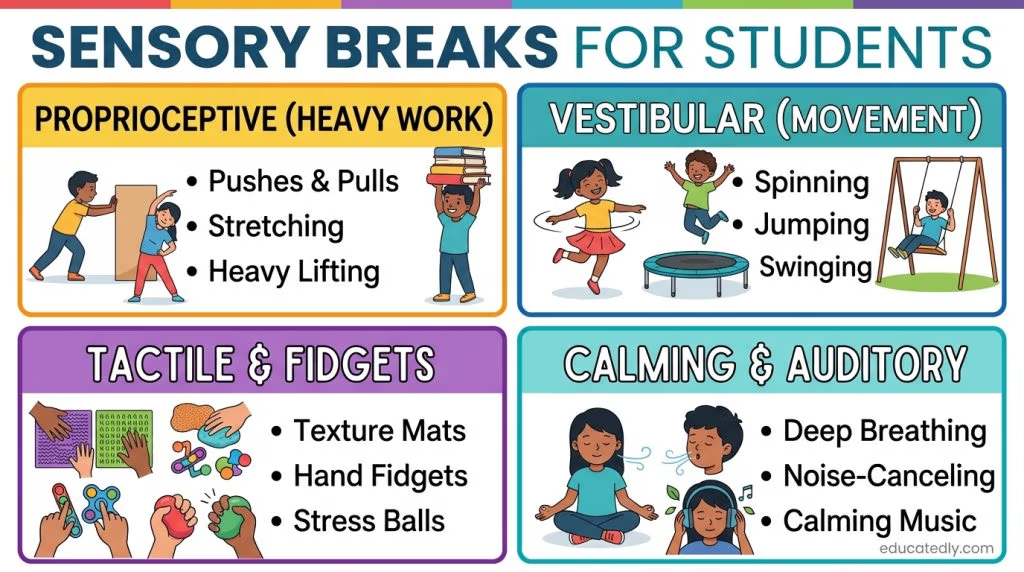
5 Quick Sensory Breaks to Help Students Stay Calm, Focused, and Ready to Learn

Every teacher knows the sign: students squirming in their seats, staring blankly out the window, or becoming easily frustrated by simple tasks. When young minds hit sensory overload, continuing to push through academic instruction rarely works. Sensory breaks—short, deliberate activities designed to help children regulate their nervous systems—are one of the most effective tools for

5 Quick Sensory Breaks to Help Students Stay Calm, Focused, and Ready to Learn Read Post »

Scroll to Top