Teacher Tips

Practical strategies and classroom shortcuts you can use tomorrow — grading systems, time-savers, and small changes that make a real difference in day-to-day teaching.

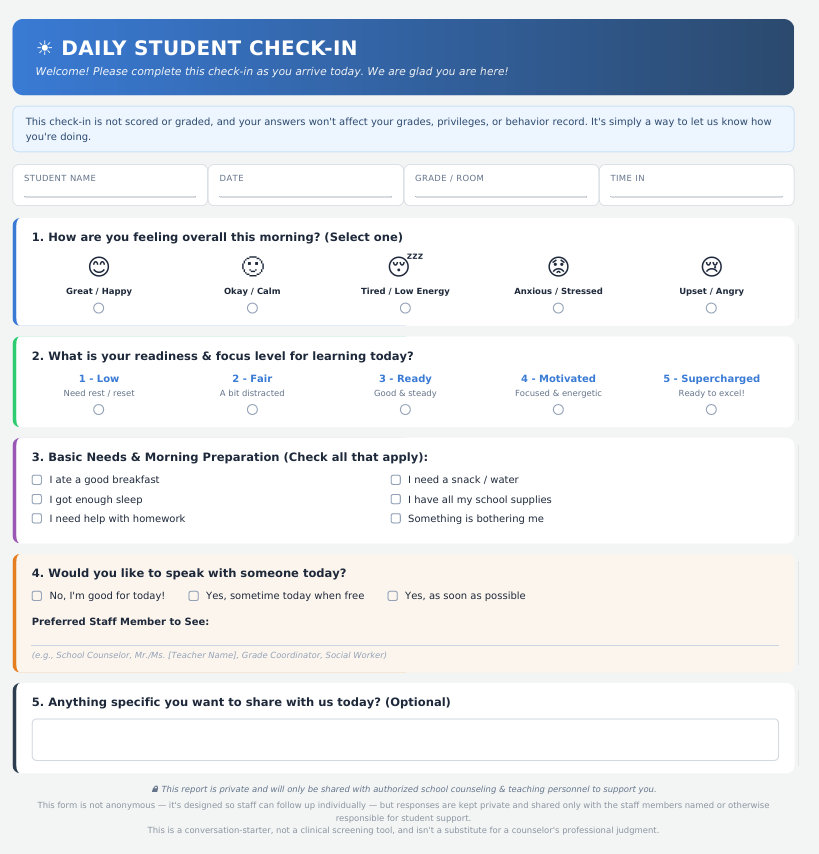
Daily Student Check-In printable form showing mood selector, learning readiness scale, basic needs checklist, and option to request a staff member
Teacher Tips

A Simple Morning Check-In Can Tell You a Lot About a Student’s Day

Most teachers can sense when something’s off with a student — but not always in time to do anything about it before the day gets rolling. A short check-in at the door, filled out in under a minute, gives that instinct something concrete to work with. Here’s a free printable Daily Student Check-In form, and

A Simple Morning Check-In Can Tell You a Lot About a Student’s Day Read Post »
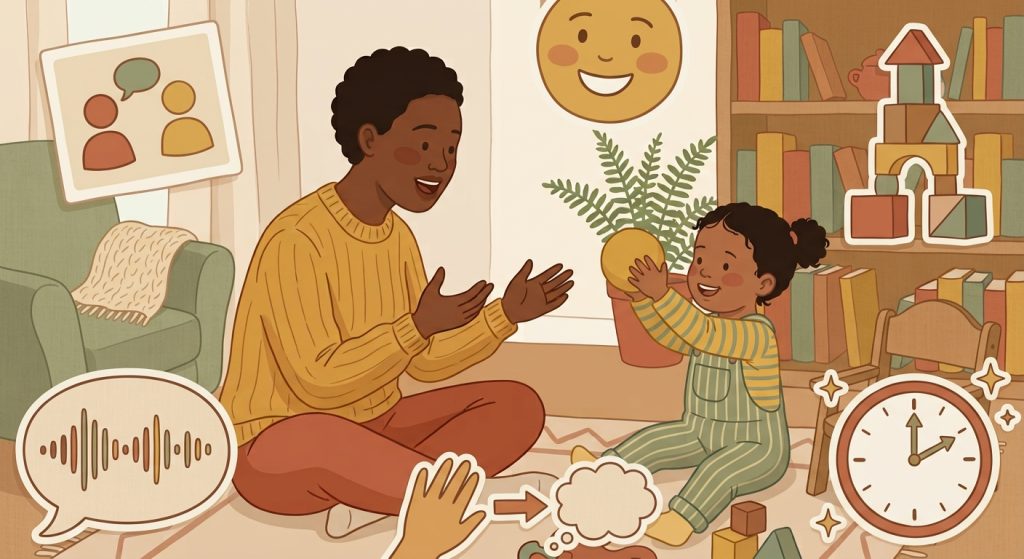
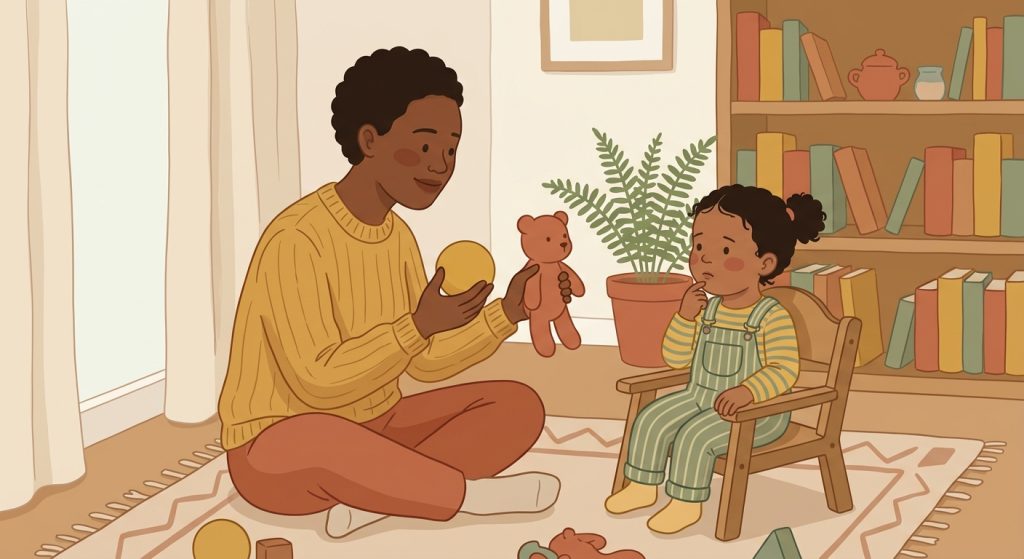
Adult and toddler with autism using communication strategies together at home
Teacher Tips

6 Ways to Help a Toddler with Autism Communicate: The Full Guide

If your toddler has autism and isn’t talking yet — or has just a few words — it can be hard to know where to start. The good news: some of the most effective strategies are simple, everyday habits that both parents and teachers can use, backed by research. Here’s the full series, all in

6 Ways to Help a Toddler with Autism Communicate: The Full Guide Read Post »

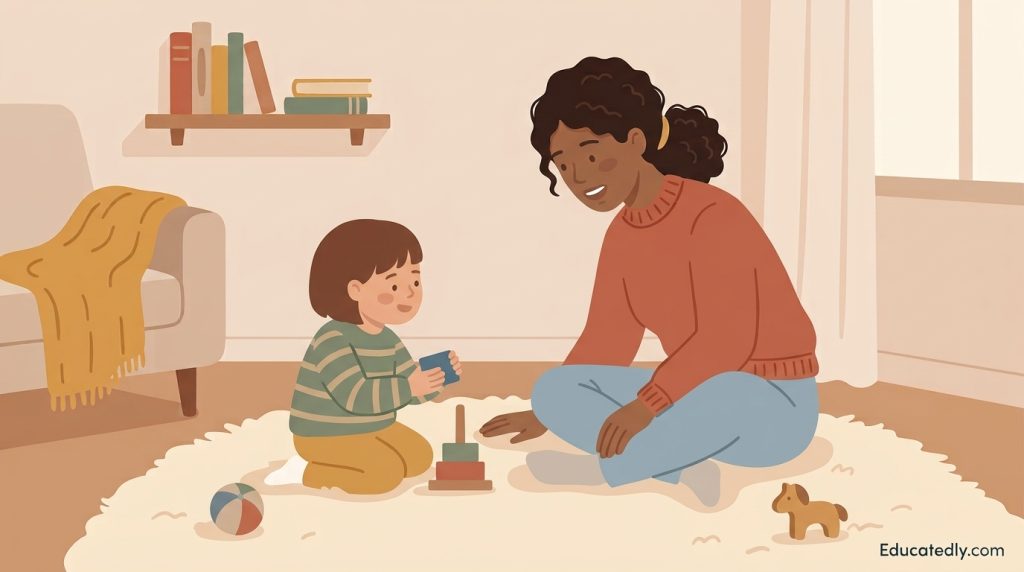
Adult warmly modeling a word back to a toddler with autism playing with a ball
Teacher Tips

Model, Don’t Correct: A Communication Strategy for Toddlers with Autism

If a toddler says “ba” for ball, the instinct is often to correct it: “No, say ball.” It comes from a good place — you want them to get it right. But for a toddler just starting to talk, that correction often does more harm than good. Why It Works Correcting a toddler’s attempt can

Model, Don’t Correct: A Communication Strategy for Toddlers with Autism Read Post »

Adult patiently waiting for a toddler with autism to respond after being offered a choice
Teacher Tips

Wait Five Extra Seconds: A Communication Strategy for Toddlers with Autism

When you ask a toddler a question or model a word, it’s natural to jump in and fill the silence within a second or two. But for a toddler with autism, that quick silence isn’t empty — it’s often exactly when they’re processing what you said. Why It Works Toddlers with autism frequently need more

Wait Five Extra Seconds: A Communication Strategy for Toddlers with Autism Read Post »

Adult and toddler with autism building language during snack time at the kitchen table
Teacher Tips

Build Language Into Everyday Routines: A Communication Strategy for Toddlers with Autism

You don’t need a “lesson plan” to build a toddler’s communication skills. Some of the strongest research-backed strategies don’t happen at a table with flashcards at all — they happen during snack time, bath time, and getting dressed. Why It Works Naturalistic intervention — teaching communication inside ordinary play and daily routines, instead of isolated

Build Language Into Everyday Routines: A Communication Strategy for Toddlers with Autism Read Post »

Talk with Them Not at Them Autism
Teacher Tips

Talk With Them, Not At Them: A Communication Strategy for Toddlers with Autism

Many well-meaning adults fill silence with questions: “What’s this? What color is it? Can you say ball?” For a toddler with autism who isn’t talking yet, this can feel like pressure — and it often shuts communication down instead of opening it up. There’s a simpler approach with just as much research behind it: narrate

Talk With Them, Not At Them: A Communication Strategy for Toddlers with Autism Read Post »

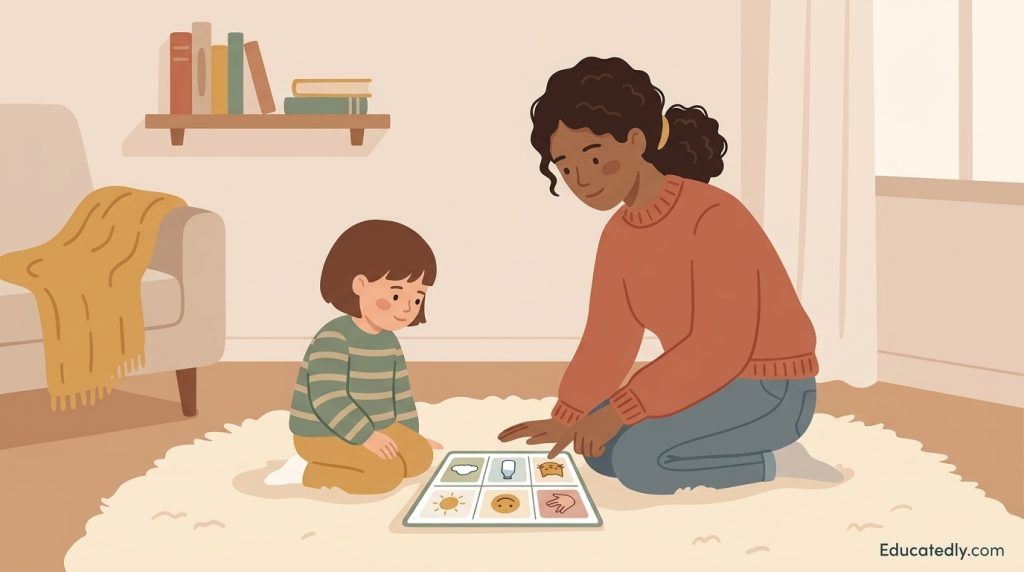
Caregiver and toddler looking together at a simple AAC picture board
Teacher Tips

AAC for 3-Year-Olds: Where to Start

A practical first-steps guide for parents and teachers introducing AAC to a young child. Why It Works If your 3-year-old isn’t talking much yet, it’s natural to want to wait and see. But research shows starting AAC (augmentative and alternative communication — think picture boards, symbol cards, or simple speech-generating apps) early doesn’t hold speech

AAC for 3-Year-Olds: Where to Start Read Post »

Adult joining a toddler with autism in play by following the child's focus on stacking blocks
Teacher Tips

Follow Their Lead: A Simple Way to Build Communication with Toddlers with Autism

When a toddler with autism isn’t talking yet, the instinct is often to redirect them — point to what you want them to look at, hold up a flashcard, ask them to repeat a word. It makes sense. But it usually backfires. The strategy with the strongest research behind it works the opposite way: get

Follow Their Lead: A Simple Way to Build Communication with Toddlers with Autism Read Post »

Toddler with autism handing a picture card to an adult to communicate
Teacher Tips

Give Them a Way to “Talk” Before They Have Words: AAC for Toddlers with Autism

One of the most common fears parents and teachers share about a nonverbal toddler with autism is this: “If I give her pictures or sign language, will she ever talk?” The research says the opposite is true. Why It Works Augmentative and Alternative Communication (AAC) — things like picture cards, sign language, or a simple

Give Them a Way to “Talk” Before They Have Words: AAC for Toddlers with Autism Read Post »

Teacher offering a student two classroom activity choices, illustrating a strategy for preventing power struggles
Teacher Tips

Offering Choices: A Simple Way to Prevent Power Struggles

One of the easiest tools for avoiding power struggles in the classroom is also one of the most overlooked: giving students a choice. Why It Works Most kids don’t fight because they refuse to do the work — they fight because they feel like they have no say in the matter. When a student is

Offering Choices: A Simple Way to Prevent Power Struggles Read Post »

Scroll to Top