One of the easiest tools for avoiding power struggles in the classroom is also one of the most overlooked: giving students a choice.
Why It Works
Most kids don’t fight because they refuse to do the work — they fight because they feel like they have no say in the matter. When a student is simply told what to do with no input, it can feel like a challenge, especially for kids who are already frustrated, anxious, or used to being told “no.”
Research on motivation backs this up: people (kids included) are far more cooperative when they feel some sense of control, even a small one, compared to when they feel completely ordered around. Giving a choice doesn’t mean giving up the requirement — it just changes how the student gets there.
How to Use It
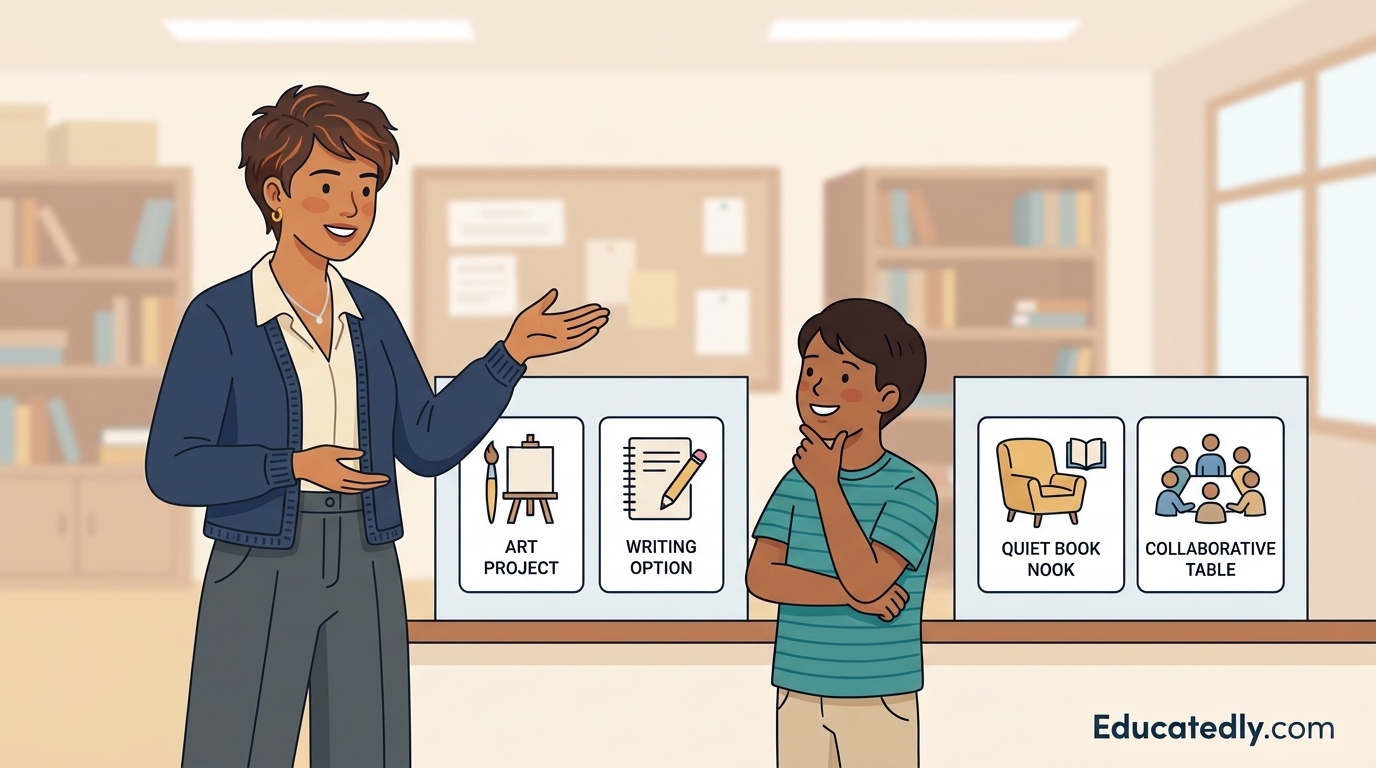
The key is keeping choices small, real, and quick. You’re not handing over control of the classroom — you’re offering two acceptable paths to the same outcome.
Some examples:
- “You can do this at your desk or at the back table — you choose.”
- “Do you want to start with the reading or the worksheet first?”
- “You can write your answer or tell it to me out loud — which is easier for you right now?”
- “We need to move on. Do you want one more minute or should we come back to this at lunch?”
Notice that in every example, the task still has to happen — the student is only choosing how or when, not whether.
A Few Tips
- Offer choices before things escalate, not just as a last resort mid-argument. It works best as prevention.
- Keep it to two options. Too many choices can overwhelm a student who’s already stressed.
- Make sure both options are ones you’re actually fine with. Don’t offer a “choice” that’s really just a threat in disguise.
- Say it calmly, not as a challenge. Tone matters as much as the words.
For Students with IEPs or Behavior Plans
Choice-making is often already part of a student’s individualized plan — check it before improvising, since some students do better with visual choice cards, fewer options, or a consistent choice routine they’ve practiced. If a student has a behavior plan, follow what’s already been agreed on for them specifically.
The Bottom Line
Offering a small, genuine choice costs you nothing and can prevent a lot of unnecessary conflict. It keeps the requirement in place, but hands the student a little bit of control — which is often all it takes to avoid a standoff.
Based on research on autonomy and motivation (Self-Determination Theory, Deci & Ryan), which has been widely studied and replicated in educational settings.