Imagine waiting a full year just to find out why your child isn’t talking yet. For many Filipino families, that isn’t hypothetical. It’s how long it can take to see one of the country’s few developmental pediatricians.
Special education in the Philippines got a major boost in 2022, when the country passed a strong inclusive education law. But the gap between what the law promises and what children actually receive is still wide. This guide explains that gap and what it means for three groups: parents looking for help, teachers supporting these learners every day, and entrepreneurs and practitioners who want to build the services families need.
Jump to your section, or read the whole thing. Each part builds on the same picture.
The gap in numbers
| Indicator | Figure |
|---|---|
| Children with disabilities in the Philippines (estimate) | 5.1 million |
| Learners with disabilities enrolled in public schools, SY 2024–25 | ~391,000 (about 8%) |
| Enrolled learners with no SPED center, resource center or SPED teacher | 6 in 10 |
| Learners with disabilities who have a formal diagnosis, SY 2025–26 | 37% |
| Certified developmental pediatricians nationwide (June 2026) | 109 |
| SPED teachers vs. enrolled learners with disabilities, SY 2023–24 | 5,147 vs. 323,344 |
The shortage is worst outside Metro Manila. In Luzon there is one developmental pediatrician for every 3,096 learners needing support. In the Visayas the ratio is 1 to 8,718, and in Mindanao it is 1 to 11,127.
Most learners with disabilities are identified only by a teacher’s observation, not a medical diagnosis. That’s partly because there are so few specialists to make one. Therapists are scarce too: about 79% of speech therapist posts and 66% of occupational therapist posts in DOH hospitals are vacant, mostly because government pay is low.
For parents: finding help for your child
If you’re worried about your child’s speech, behavior or learning, you’re not alone, and you don’t have to wait for a diagnosis to start getting support.
The main types of support
- Developmental assessment: a developmental pediatrician, child psychiatrist or child neurologist evaluates your child and gives a diagnosis. That diagnosis often unlocks therapy referrals and school accommodations.
- Speech-language therapy: helps with speech delay, language understanding, and social communication.
- Occupational therapy (OT): builds fine motor skills, sensory regulation, and everyday skills like dressing and writing.
- Applied behavior analysis (ABA): a structured approach often used for children with autism to build communication, social and daily-living skills.
- SPED tutoring or a shadow teacher: one-on-one help, either at home or in a regular classroom.
What it typically costs
Rates vary widely by setting. These are typical per-session prices for occupational therapy in 2026. Speech therapy is similar, with premium centers charging up to about ₱4,000.
| Setting | Typical rate per session |
|---|---|
| Government hospitals | ₱100–500 |
| University clinics | ₱300–800 |
| NGO programs | ₱400–1,000 |
| Mid-range private clinics | ₱800–1,500 |
| Established private centers | ₱1,500–2,500 |
| Home visits (private) | ₱2,000–4,500 |
Many children need 1–3 sessions a week, so costs add up quickly. Some centers offer package rates for prepaid bundles of sessions.
Ways to keep costs down
- Get on waitlists early. Waits for government hospitals and developmental pediatricians can run for months, so book as soon as you have concerns.
- Try university clinics. Schools that train therapists, such as UP Manila, UST and DLSU, run clinics that often charge less.
- Ask about parent coaching. Many therapists can teach you exercises to practice at home between sessions, so you may need fewer paid sessions.
- Consider teletherapy for follow-up sessions, especially if you live far from a city.
- Connect with parent groups such as your local chapter of the Autism Society Philippines. They’re often the best source of local referrals.
Your child’s rights at school
Under the Inclusive Education Act (RA 11650), a public school cannot deny a child admission because of a disability. The law also calls for an Individualized Education Plan (IEP) for learners with disabilities, prepared with input from parents. Ask your child’s school how they identify and support learners with disabilities, and whether there’s an Inclusive Learning Resource Center (ILRC) or SPED teacher in your area.
This section is general information, not medical advice. Talk to your child’s doctor or a licensed specialist about your child’s specific needs.
For teachers: supporting learners without a diagnosis
Three out of four learners with disabilities in the Philippines attend regular classrooms, and most have no formal diagnosis. In practice, the regular classroom teacher is often their main source of support. You don’t need a SPED license to make a real difference.
Practical strategies that help most learners
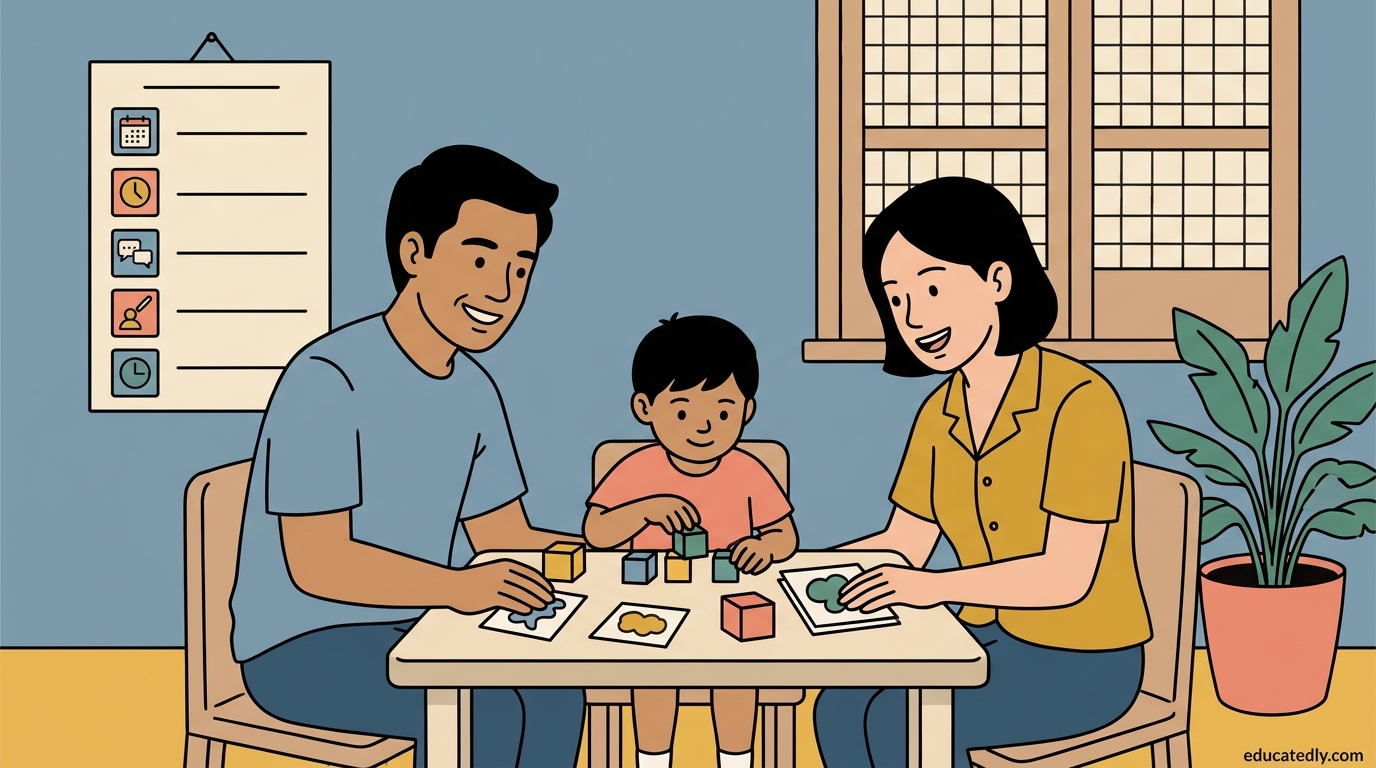
- Make routines visible. A posted daily schedule with pictures or icons reduces anxiety and helps learners know what comes next.
- Break tasks into small steps. Give one or two instructions at a time, and check for understanding before moving on.
- Pair words with visuals. Diagrams, gestures, real objects and short videos help learners who struggle with spoken or written language.
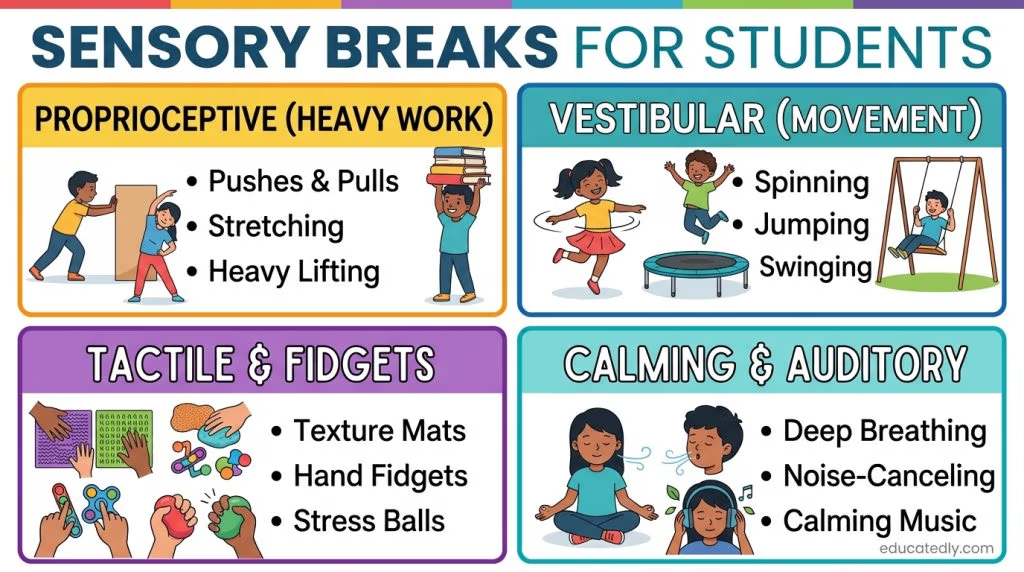
- Offer movement and sensory breaks. A short stretch, an errand, or a quiet corner can head off frustration before it becomes a behavior problem.
- Seat strategically. Place learners who need it near you, away from doors and windows, or next to a supportive peer.
- Allow different ways to show learning. Oral answers, drawings or pointing can stand in for writing when writing is the barrier.
- Praise effort and specific behaviors. “You kept working even when it was hard” builds persistence better than “Good job.”
Working with families
- Share what you observe, not a label. Describe specific behaviors (“He has trouble following two-step directions”) and suggest an assessment, rather than naming a condition.
- Ask parents what works at home. They often know which strategies calm or motivate their child.
- Keep a simple log of what you try and how the learner responds. It’s valuable input for an IEP and for any specialist the family sees later.
Know the law
RA 11650 calls for training teachers in inclusive education and for multidisciplinary support through ILRCs. Ask your school head or division office what training and support are available to you. These centers are still being rolled out, so speaking up helps show where the need is.
Looking for classroom-ready material? Educatedly’s free lesson library includes Life Skills lessons on self-regulation, following directions and study habits that support learners who benefit from clear, visual instruction.
For startups and practitioners: where the need is
For therapists, educators and founders, these gaps are also a chance to build something families badly need. The most useful ventures will be the ones that reach families who are currently left out.
Underserved regions
Only 4 of the country’s 18 regions have PhilHealth-contracted facilities offering speech therapy and OT for children with developmental disabilities. The regions with the most learners left without these services are:
| Region | Learners with disabilities without contracted speech/OT services |
|---|---|
| Calabarzon | 58,272 |
| Bicol | 37,068 |
| Central Luzon | 35,616 |
| Zamboanga Peninsula | 34,977 |
Calabarzon and Central Luzon combine large unmet need with growing suburbs and easy access to Manila-trained professionals. Bicol and Mindanao have even deeper gaps, and affordable models will matter most there.
Services in demand
- Developmental assessment and screening: the biggest bottleneck, and the first step for every family.
- Speech therapy: usually the first service parents look for.
- Occupational therapy: often bundled with speech in child development centers.
- ABA: families report long waitlists and a shortage of qualified practitioners.
- Shadow teachers and SPED tutoring: growing as more learners are mainstreamed.
- Teacher and parent training: required under RA 11650, and it can be delivered online at scale.
- Teletherapy and booking platforms: a few startups are already working on this.
- Programs for teens and adults: most current programs focus on children aged 6 and under.
Things to plan for
- Staffing is the hardest part. Speech therapy and OT are licensed professions, and graduates are few. Plan for recruitment, competitive pay and supervising assistants or trained aides.
- Most families pay out of pocket. Group sessions, parent coaching, sliding-scale pricing and teletherapy can reach more children than premium one-on-one therapy alone.
- Quality and trust matter. Families raise concerns about unverified credentials, so being transparent about who delivers therapy is a real differentiator.
- Watch for partnerships. Local governments and DepEd need help delivering ILRC services, and PhilHealth coverage is expanding slowly. Both could open new funding paths.
What’s changing
- More ILRCs. RA 11650 requires at least one Inclusive Learning Resource Center in every city and municipality, offering free therapy and support services. Rollout is slow: in July 2026, a House committee urged DepEd to fully implement the law.
- PhilHealth coverage. PhilHealth’s Z Benefits now cover speech therapy and OT for children with developmental disabilities at contracted facilities, but only in 4 of 18 regions so far. Parent groups are pushing to extend coverage to assessments.
- A proposed National Autism Care Plan. A Senate bill would create a national framework for autism screening, diagnosis and care.
- Pay reform for therapists. EDCOM 2 has proposed raising the entry-level government salary grade for speech therapists, OTs and physical therapists to help fill vacant public posts.
The bottom line
Millions of Filipino children with disabilities are still waiting for diagnosis, therapy and the right support at school. Parents who know their options can get help sooner. Teachers can make classrooms work better for these learners right now. And practitioners and founders who build affordable, trustworthy services can reach children the system hasn’t.
Have you looked for special education services in the Philippines, as a parent, teacher or provider? Share your experience in the comments.
Sources (figures as of November 2026)
- EDCOM 2: 5M Filipino children with disabilities still underserved – The Post
- Only 8% of disabled kids enter schools – Daily Tribune
- Only 37% of learners with disabilities have formal diagnoses – Daily Tribune
- 79% of speech therapist posts in DOH hospitals vacant – Daily Tribune
- House panel urges DepEd to fully implement Inclusive Education Act – The Post
- Special needs teachers fall short – BusinessWorld
- ASP-Davao pushes for PhilHealth coverage of autism aid – SunStar
- Strengthening the Autism Care Plan – Inquirer
- Occupational therapy for autism in the Philippines: costs – ClinicFinderPH
- Speech therapy for autism in the Philippines: costs – ClinicFinderPH
- Barriers to ABA access in Cavite – study
- Speak Clinic launch – Manila Bulletin
- RA 11650 summary – Digest.ph