
Self-Regulation: Pause, Name, Choose
6-8
1
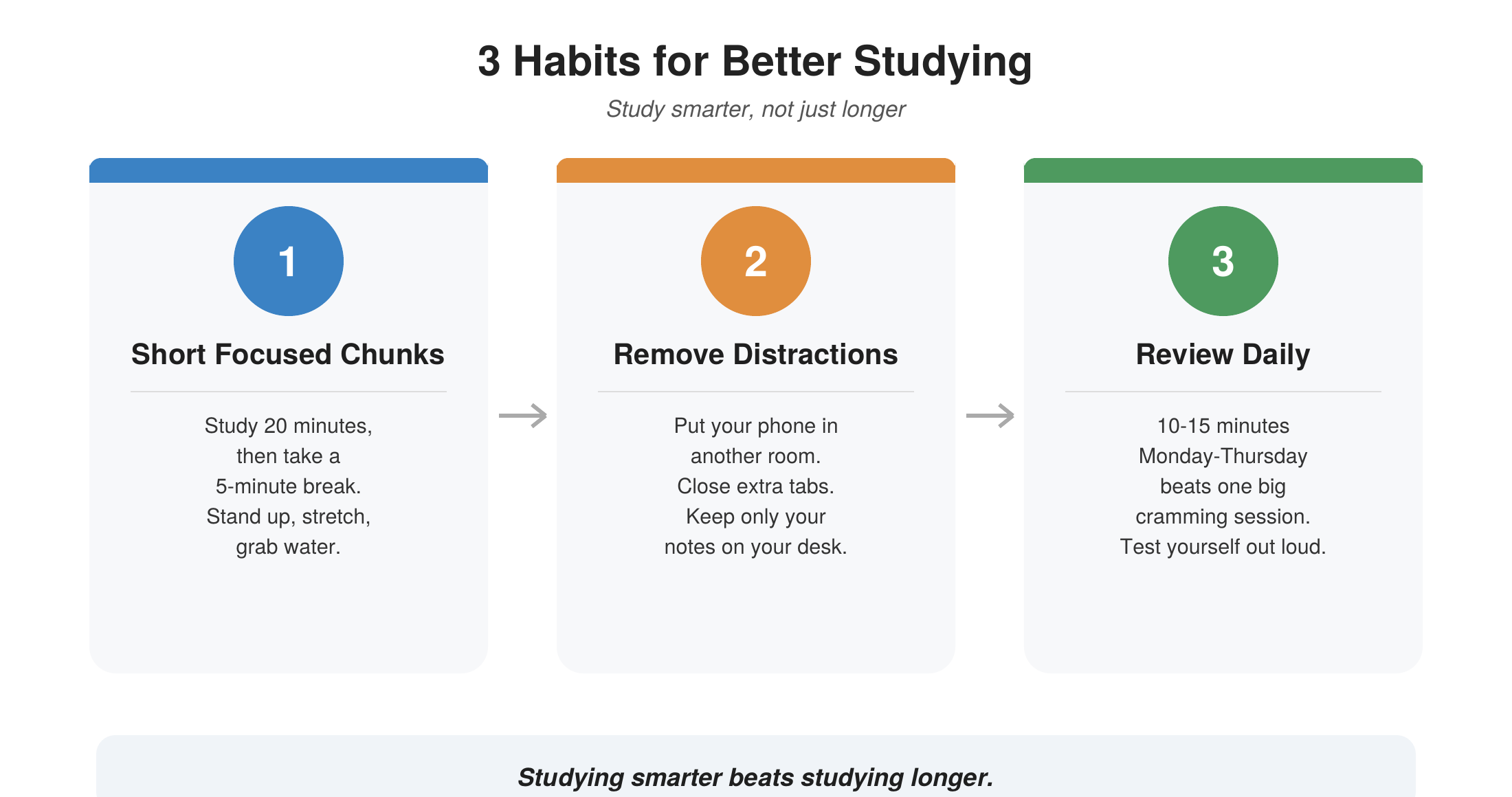
Teacher Note: Students can watch the video lesson above and answer the questions. Click the “Teacher Answer Key” dropdown below when you are ready to review the solutions!
Key Concepts:
• Short Focused Chunks: Study in focused blocks (like 20 minutes), then take a short break to stretch, grab water, and reset your focus.
• Remove Distractions: Put your phone in another room, close extra tabs, and keep only what you need on your desk.
• Review Daily: A little review each day (10-15 minutes) works better than one long cramming session the night before.
Instructions: Read each question carefully and write your answer in the space provided.
1. Your brain loses focus when pushed too long without a break, making studying less effective.
2. 20 minutes of studying, followed by a 5-minute break.
3. Any two: put your phone in another room, close extra tabs, keep only your notes on your desk.
4. Reviewing a little each day helps information stick better than one huge cramming session.
5. Using flashcards, or explaining the topic out loud.
6. Answers will vary; check that the student picked one specific habit and described a concrete way to apply it.
Disclaimer: This worksheet was generated with AI assistance based on original video content. It is intended for educational reference only. Teachers are encouraged to review and adjust questions to fit their curriculum standards before classroom use.
🎯 Extension Activity: Faster typing means less time spent on homework and more time for everything else. Try our free Typing Practice tool to build your speed and accuracy — track your progress with live stats as you go.