
3 Habits for Better Studying
6-8
1
Teacher Note: Students can watch the video lesson above and answer the questions. Click the “Teacher Answer Key” dropdown below when you are ready to review the solutions!
Key Concepts:
• Self-Regulation: Noticing your emotions and choosing how to respond instead of reacting right away.
• Feelings vs. Actions: Feelings are real. Actions are choices.
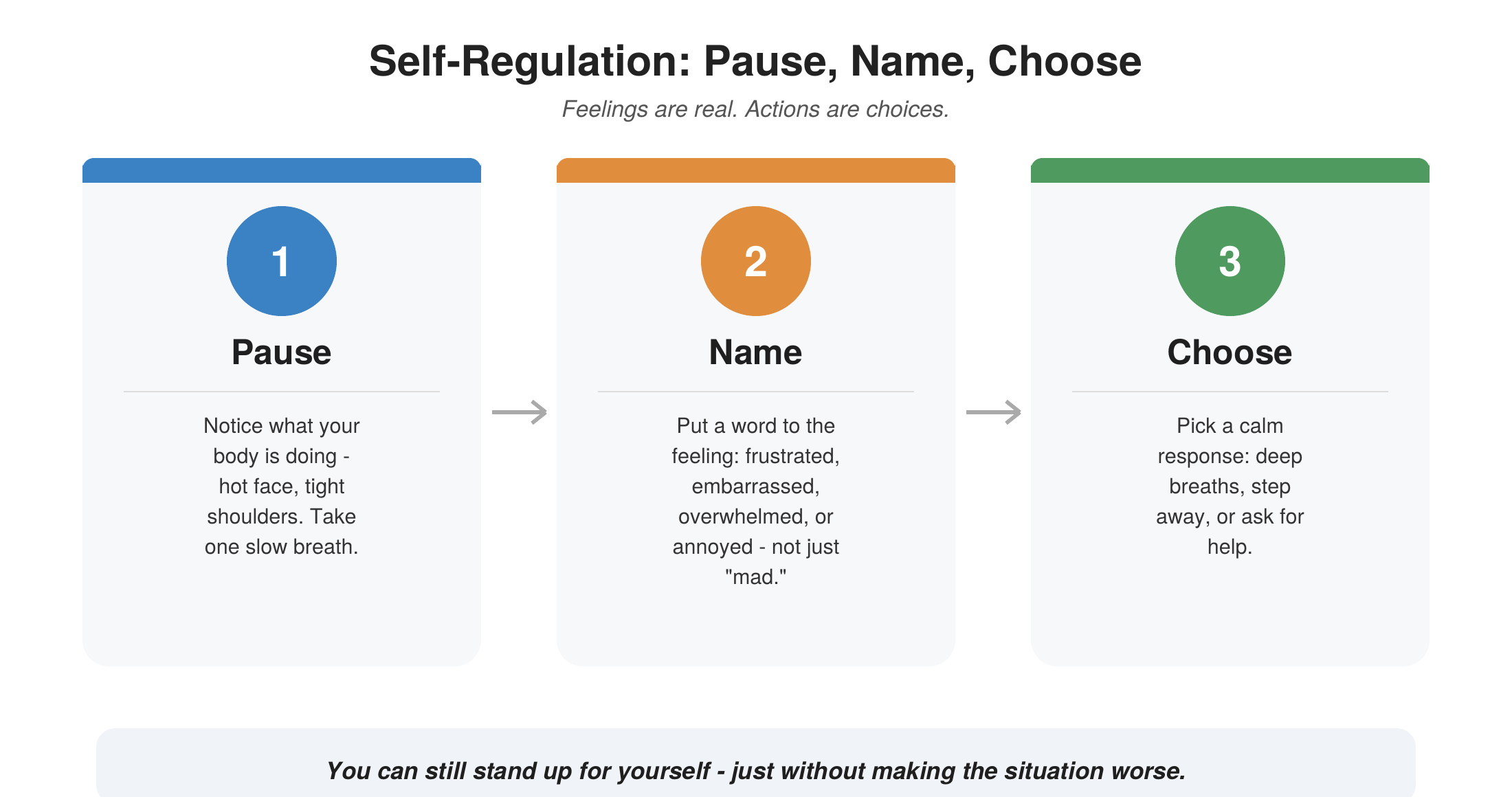
• Pause, Name, Choose: Pause to notice what your body is doing. Name the specific emotion. Choose a calm response.
Instructions: Read each question carefully and write your answer in the space provided.
1. Self-regulation means noticing your emotions and choosing how to respond instead of reacting right away.
2. Pause (notice what your body is doing), Name (put a word to the feeling), Choose (pick a calm response).
3. Naming the specific emotion helps your brain slow down, rather than staying stuck in a general reaction like “mad.”
4. Accept any two: taking deep breaths, stepping away for a minute, asking for help.
5. Answers will vary; check that the student applies all three steps to a real, specific scenario.
6. False — self-regulation means acknowledging feelings are real, then choosing how to act on them, not ignoring them.
Disclaimer: This worksheet was generated with AI assistance based on original video content. It is intended for educational reference only. Teachers are encouraged to review and adjust questions to fit their curriculum standards before classroom use.
🎯 Extension Activity: Have students keep a "Pause, Name, Choose" log for one day, jotting down one moment they felt a strong emotion, the specific word they'd use to name it, and the calm response they chose (or wish they had chosen).