
College vs. Community College: What’s the Difference?
9-12
2
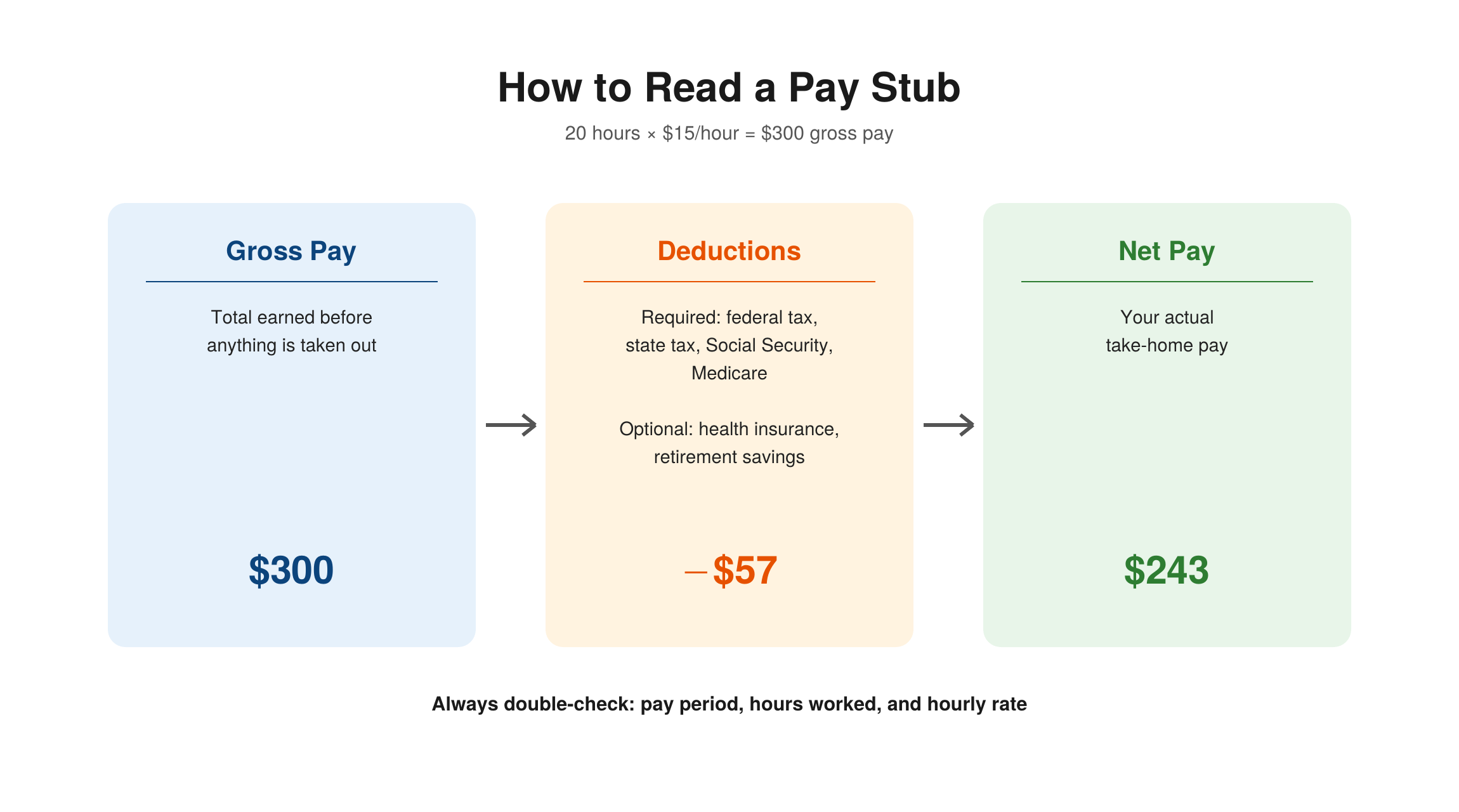
Teacher Note: Students can watch the video lesson above and answer the questions. Click the “Teacher Answer Key” dropdown below when you are ready to review the solutions!
Key Concepts:
• Gross Pay: The total amount earned before any deductions are taken out.
• Deductions: Required amounts (federal tax, state tax, Social Security, Medicare) and optional amounts (like health insurance) subtracted from gross pay.
• Net Pay: Your actual take-home pay, deposited into your bank account.
Instructions: Read each question carefully and write your answer in the space provided.
1. $300
2. Any two of: federal tax, state tax, Social Security, Medicare
3. Health insurance or retirement savings
4. Gross pay is the total before deductions; net pay is the actual take-home amount after deductions
5. Pay period, hours worked, and hourly rate
Disclaimer: This worksheet was generated with AI assistance based on original video content. It is intended for educational reference only. Teachers are encouraged to review and adjust questions to fit their curriculum standards before classroom use.
🎯 Extension Activity: Give students a sample hourly rate and hours worked. Have them calculate gross pay, then subtract a given deduction amount to find net pay — then explain in their own words why the two numbers are different.