
Converting Between Fahrenheit and Celsius: A Step-by-Step Guide
6-8
2
Teacher Note: Students can watch the video lesson above and answer the questions. Click the “Teacher Answer Key” dropdown below when you are ready to review the solutions!
Key Concepts:
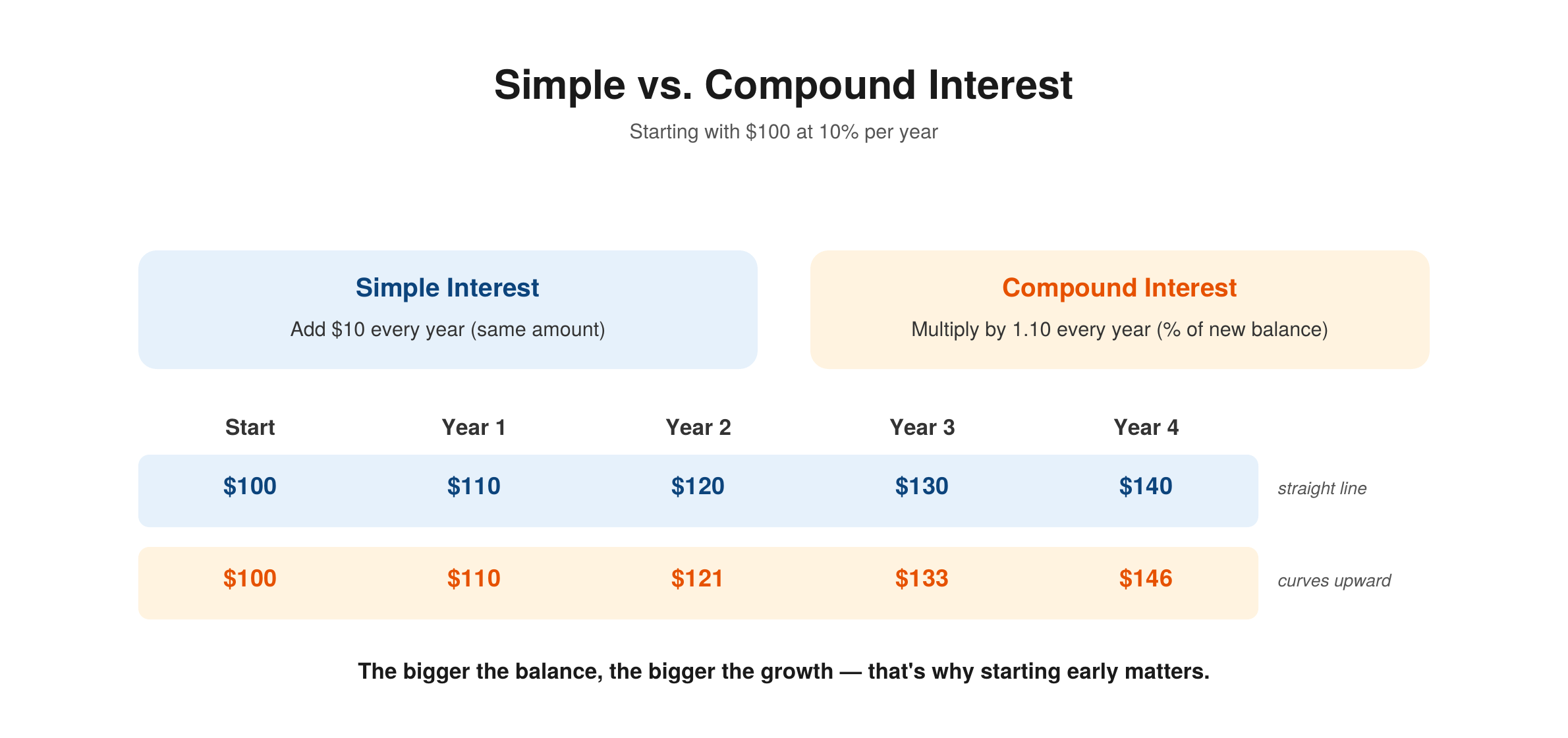
• Simple Interest: Adds the same dollar amount every year, based only on the original principal.
• Compound Interest: Multiplies the current balance by the same rate every year, so the growth itself grows over time.
• The Shape: Simple interest grows in a straight line; compound interest curves upward like a snowball.
Instructions: Read each question carefully and write your answer in the space provided.
1. $10
2. Because each year’s interest is calculated on the new, larger balance, not just the original amount
3. $121
4. Simple interest makes a straight line; compound interest curves upward
5. Because more time means more years for the balance to compound and grow faster, giving your money more chances to multiply
Disclaimer: This worksheet was generated with AI assistance based on original video content. It is intended for educational reference only. Teachers are encouraged to review and adjust questions to fit their curriculum standards before classroom use.
🎯 Extension Activity: Have students calculate both simple and compound interest on $200 at 5% per year for 3 years, then compare the final balances and explain which grew faster and why.