
Every teacher knows the sign: students squirming in their seats, staring blankly out the window, or becoming easily frustrated by simple tasks. When young minds hit sensory overload, continuing to push through academic instruction rarely works. Sensory breaks—short, deliberate activities designed to help children regulate their nervous systems—are one of the most effective tools for restoring classroom focus and emotional stability. Why Do Students Need Sensory Breaks? Sensory breaks give the brain a chance to reset by either calming an overstimulated system or waking up a sluggish one. Incorporating these brief moments into the daily classroom routine provides clear benefits:
- Regulate Emotions: Helps students manage overwhelming feelings and find calm in a busy classroom environment.
- Boost Concentration: Clears brain fog and resets attention span for upcoming academic tasks.
- Reduce Physical Stress: Releases built-up muscle tension and lowers sensory stress caused by bright lights or continuous noise.
5 Easy Classroom Sensory Breaks to Try Today These quick, low-prep activities require zero equipment and can be completed right at or next to a student’s desk in under two minutes:
- Deep Breathing (4-4-6 Method)
- How to do it: Inhale slowly through the nose for 4 seconds, hold the breath for 4 seconds, and exhale slowly through the mouth for 6 seconds.
- Why it works: Slow exhalations activate the parasympathetic nervous system to decrease heart rate and reduce anxiety.
- Hand Squeezes
- How to do it: Have students tightly clench their hands into fists for 5 seconds, then completely release and wiggle their fingers.
- Why it works: Provides proprioceptive input through deep muscle pressure, helping students feel grounded.
- Wall Push-Ups
- How to do it: Students place their palms flat against a classroom wall and perform slow, controlled push-ups.
- Why it works: Delivers heavy work input to joints and muscles, which stabilizes energy levels.
- Mindful Listening
- How to do it: Ask the class to close their eyes and quietly identify three distinct background sounds (e.g., the clock ticking, air blowing, distant footsteps).
- Why it works: Shifts focus from internal sensory chaos back to auditory awareness.
- Finger Taps
- How to do it: Students tap each finger to their thumb in a sequential, rhythmically quiet pattern (1-2-3-4, 4-3-2-1).
- Why it works: Enhances fine motor coordination while quietly redirecting restless energy.
How to Introduce Sensory Breaks to Your Class
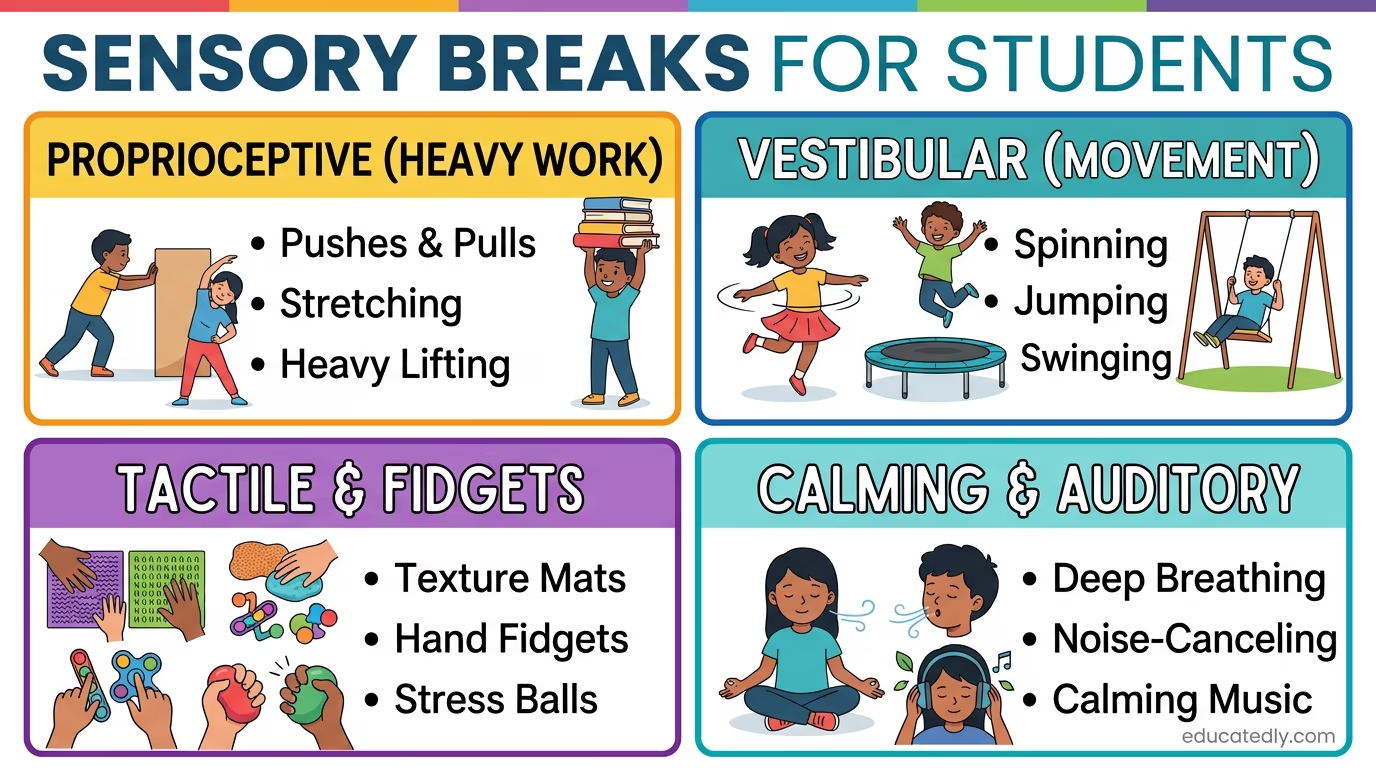
To maximize the impact of sensory breaks, establish them as a proactive habit rather than a reactive punishment. Set clear expectations: explain that these breaks are tools to help everyone feel ready to learn. Using visual cues, posters, or infographics in your classroom lets students independently select the break that best fits their needs at any given moment.

