A practical first-steps guide for parents and teachers introducing AAC to a young child.
Why It Works
If your 3-year-old isn’t talking much yet, it’s natural to want to wait and see. But research shows starting AAC (augmentative and alternative communication — think picture boards, symbol cards, or simple speech-generating apps) early doesn’t hold speech back. It supports it. A review of speech-generating device studies found the vast majority of children showed more spoken words after starting AAC, not fewer. Age 3 sits right in the window when the brain is primed for language, which is exactly why starting now — rather than waiting for more words to show up on their own — tends to pay off.
How to Use It
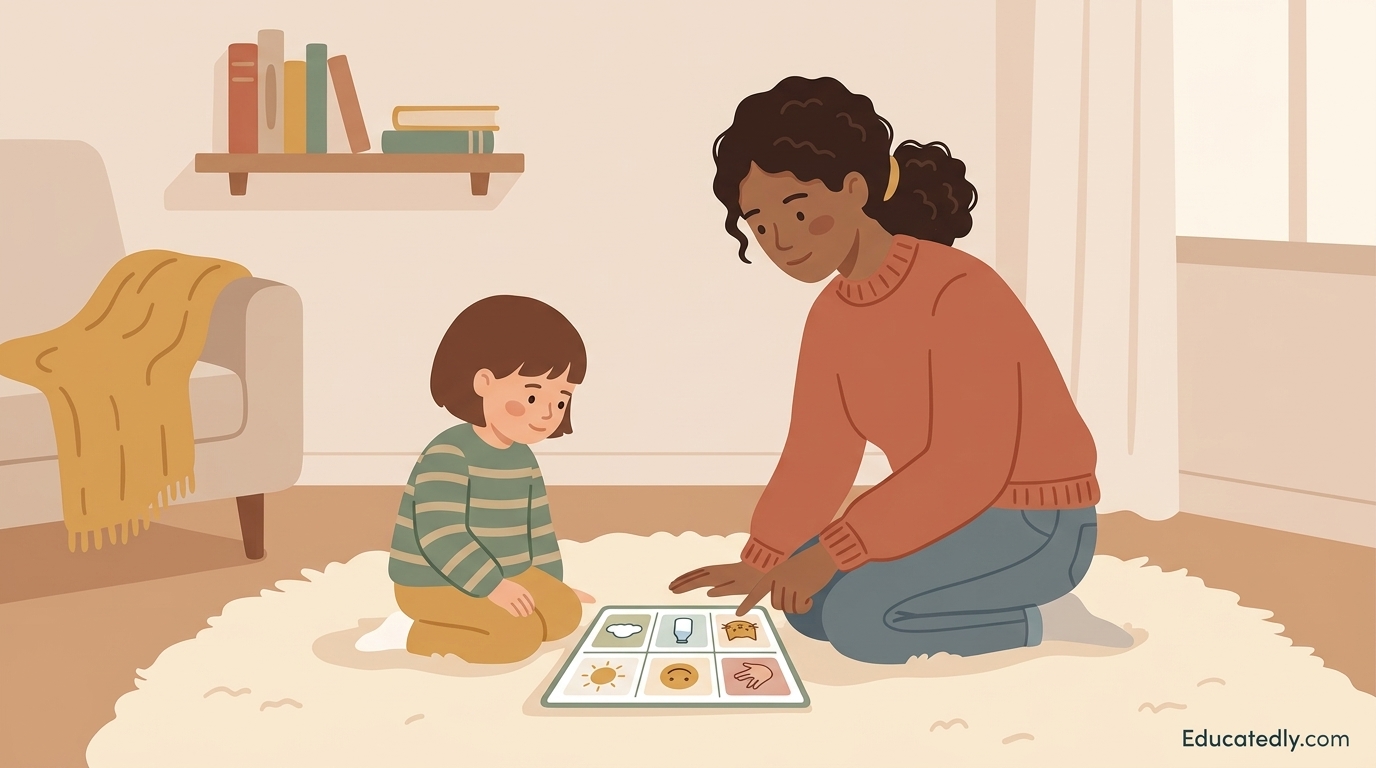
Start small. A single board with 6–10 core words (more, help, go, stop, all done, eat, play) covers most of what a 3-year-old wants to say across the day. You don’t need a device to begin — laminated pictures or a simple binder work fine.
The key habit: model, don’t test. Point to or tap the symbol yourself as you say the word out loud, in real moments — reaching for a snack, wanting the swing again, needing help with a zipper. You’re not quizzing your child (“Can you say more?”); you’re showing them how AAC works, the same way you’d narrate for a child learning spoken words.
A Few Tips
- Keep the board or device nearby at all times — snack time, playtime, bath time — not just during “speech practice.”
- Follow your child’s interest first. A word they’re motivated to use (like a favorite snack) sticks faster than a word chosen for them.
- Expect slow, quiet beginnings. Many 3-year-olds watch and imitate for a while before initiating on their own — that’s normal, not a sign it isn’t working.
For IEPs/Special Ed Context
If your 3-year-old already has an IEP or is receiving early intervention services, AAC goals can be written directly into the plan — for example, targeting a specific number of core words modeled and used across settings each month. A speech-language pathologist is the right partner for choosing the specific system or app, since they can match it to your child’s motor, visual, and communication needs.
The Bottom Line
You don’t need to wait for more words before trying AAC — starting at 3 is well-supported by research, and a simple low-tech board is a perfectly good place to begin. Model it often, follow your child’s lead, and give it time.
Want to build your own board? Our Core Vocabulary Board Builder works for any age or stage — try it here →
Source: Light, Barwise, Gardner, & Flynn (2021), “Personalized early AAC intervention to build language and literacy skills: A case study of a 3-year-old with complex communication needs,” Topics in Language Disorders.