
3 Habits for Better Studying
6-8
1
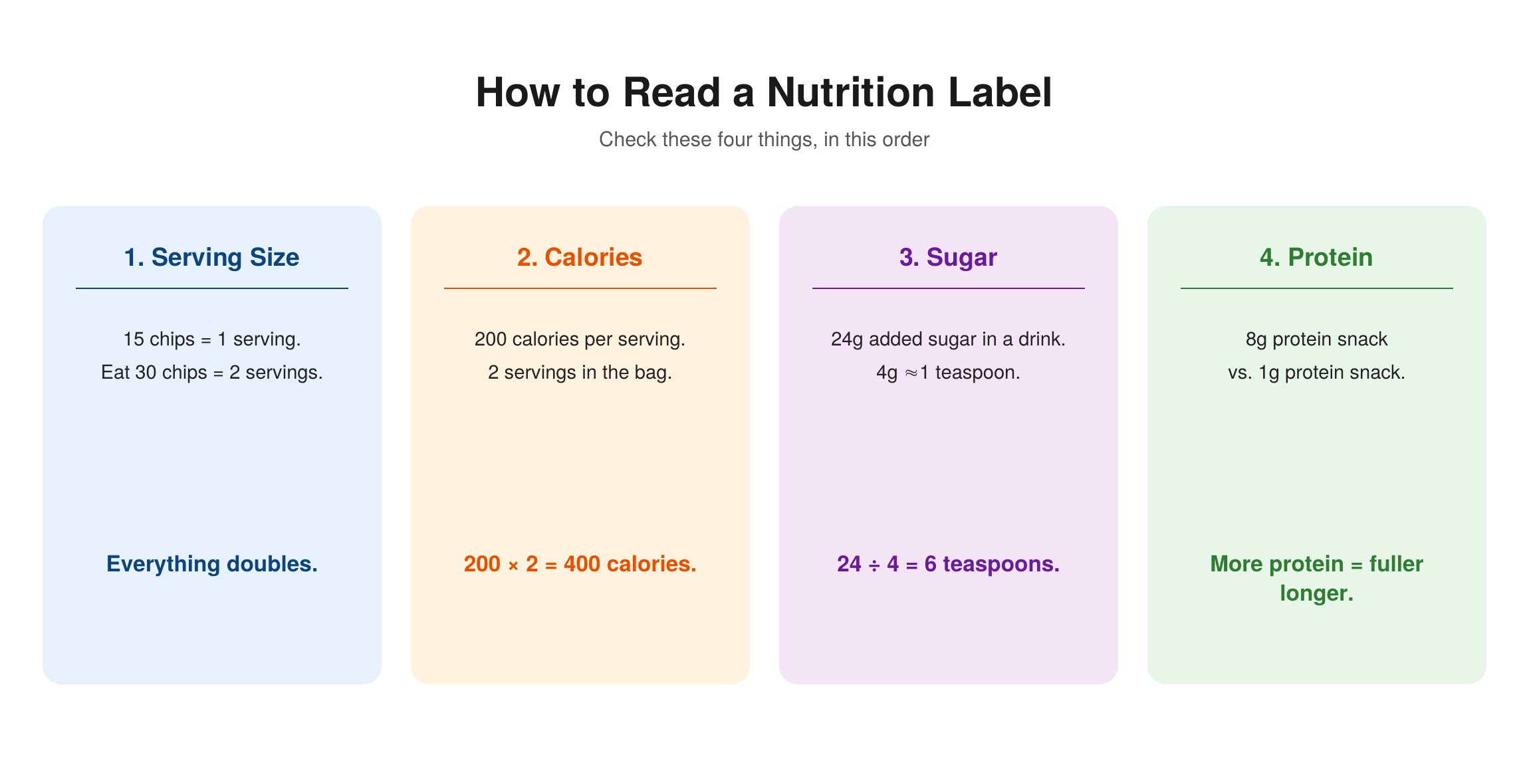
Teacher Note: Students can watch the video lesson above and answer the questions. Click the “Teacher Answer Key” dropdown below when you are ready to review the solutions!
Key Concepts:
• Serving Size: Every number on the label is based on one serving. Eating more servings multiplies everything.
• Calories: A measure of energy; multiply calories per serving by the number of servings eaten.
• Added Sugar: Sugar added during processing; about 4 grams equals 1 teaspoon.
• Protein: Helps you feel full longer.
Instructions: Read each question carefully and write your answer in the space provided.
1. 2 servings
2. 400 calories
3. About 6 teaspoons
4. Because protein helps keep you full longer
5. Serving size, calories, sugar, protein
Disclaimer: This worksheet was generated with AI assistance based on original video content. It is intended for educational reference only. Teachers are encouraged to review and adjust questions to fit their curriculum standards before classroom use.
🎯 Extension Activity: Have students bring in (or look up) two different snack nutrition labels and compare them using all four steps — serving size, calories, sugar, and protein — to decide which is the better choice and explain why.