
Contractions: Combining Two Words Into One
3-5
1
Teacher Note: Students can watch the video lesson above and answer the questions. Click the “Teacher Answer Key” dropdown below when you are ready to review the solutions!
Key Concepts:
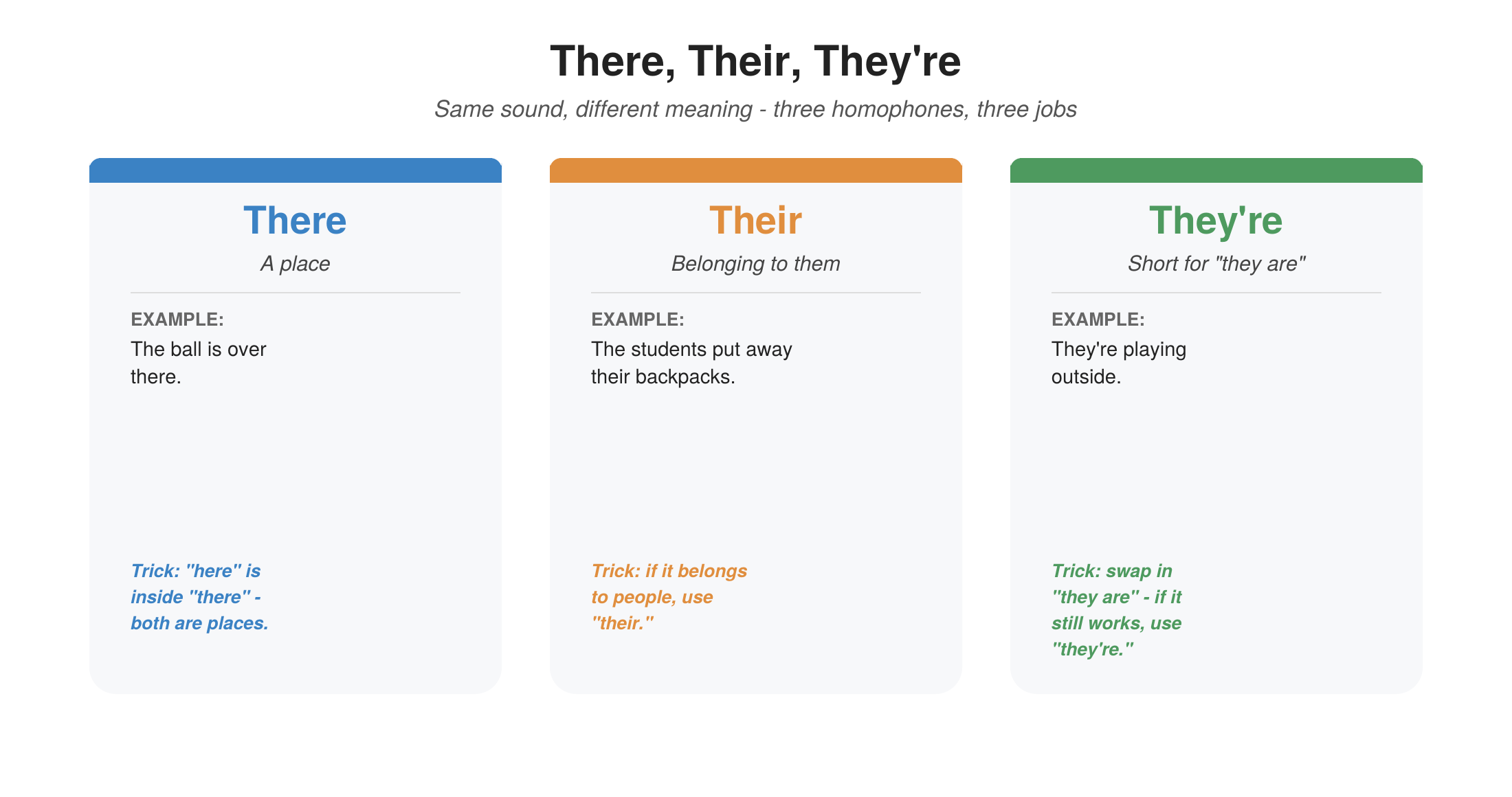
• There: Used for a place. Trick: the word “here” is inside “there,” and both are places.
• Their: Used when something belongs to people. Trick: if it belongs to them, use “their.”
• They’re: Short for “they are.” Trick: if you can swap in “they are” and the sentence still works, use “they’re.”
Instructions: Read each question carefully and write your answer in the space provided.
1. The word “here” is hiding inside “there,” and both words talk about places.
2. Try replacing the word with “they are” — if the sentence still makes sense, “they’re” is correct.
3. “Their” — the backpacks belong to the students.
4. “They’re” — it can be replaced with “they are” (“They are playing outside”).
5. “There” — it’s describing a place.
6. Answers will vary; check that each sentence uses the correct homophone for its meaning (place / belonging / “they are”).
Disclaimer: This worksheet was generated with AI assistance based on original video content. It is intended for educational reference only. Teachers are encouraged to review and adjust questions to fit their curriculum standards before classroom use.
🎯 Extension Activity: Give students a short paragraph with "there," "their," and "they're" removed, and have them fill in the correct word for each blank, then explain their choice using one of the three tricks from the video.