
Contractions: Combining Two Words Into One
3-5
1
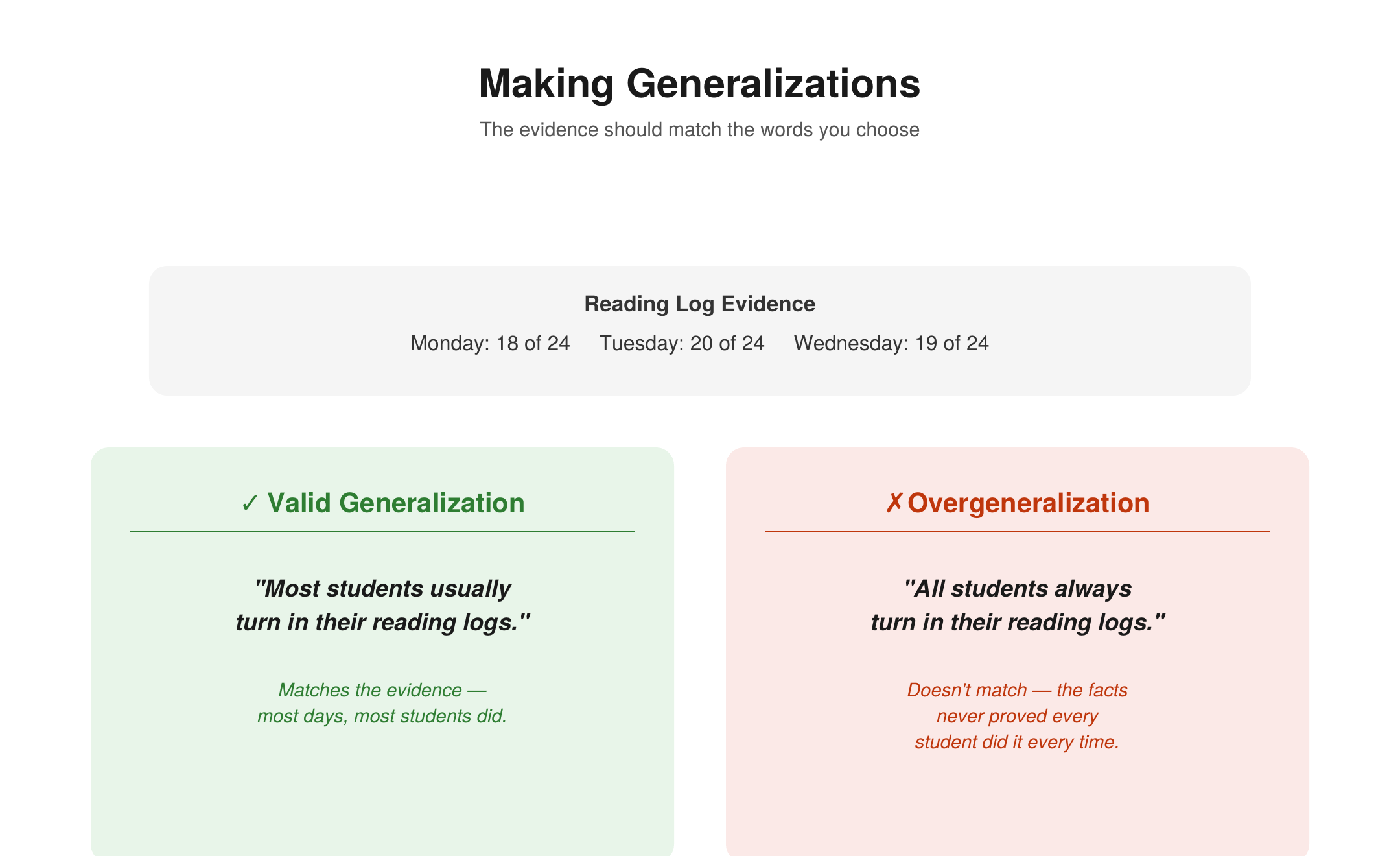
Teacher Note: Students can watch the video lesson above and answer the questions. Click the “Teacher Answer Key” dropdown below when you are ready to review the solutions!
Key Concepts:
• Generalization: A broad statement based on several facts or examples.
• Careful Words: Words like most, many, usually, and often help make a generalization match the evidence.
• Overgeneralization: A statement that goes too far, using words like all or always without enough evidence.
Instructions: Read each question carefully and write your answer in the space provided.
1. A broad statement based on several facts or examples
2. Any two of: most, many, usually, often
3. Most students usually turn in their reading logs
4. Because the facts never proved that every single student turned it in every single time
5. The evidence
Disclaimer: This worksheet was generated with AI assistance based on original video content. It is intended for educational reference only. Teachers are encouraged to review and adjust questions to fit their curriculum standards before classroom use.
🎯 Extension Activity: Give students a small data set (like how many students brought a pencil to class over 3 days) and have them write one valid generalization and one overgeneralization based on the same evidence.