
Contractions: Combining Two Words Into One
3-5
1
Teacher Note: Students can watch the video lesson above and answer the questions. Click the “Teacher Answer Key” dropdown below when you are ready to review the solutions!
Key Concepts:
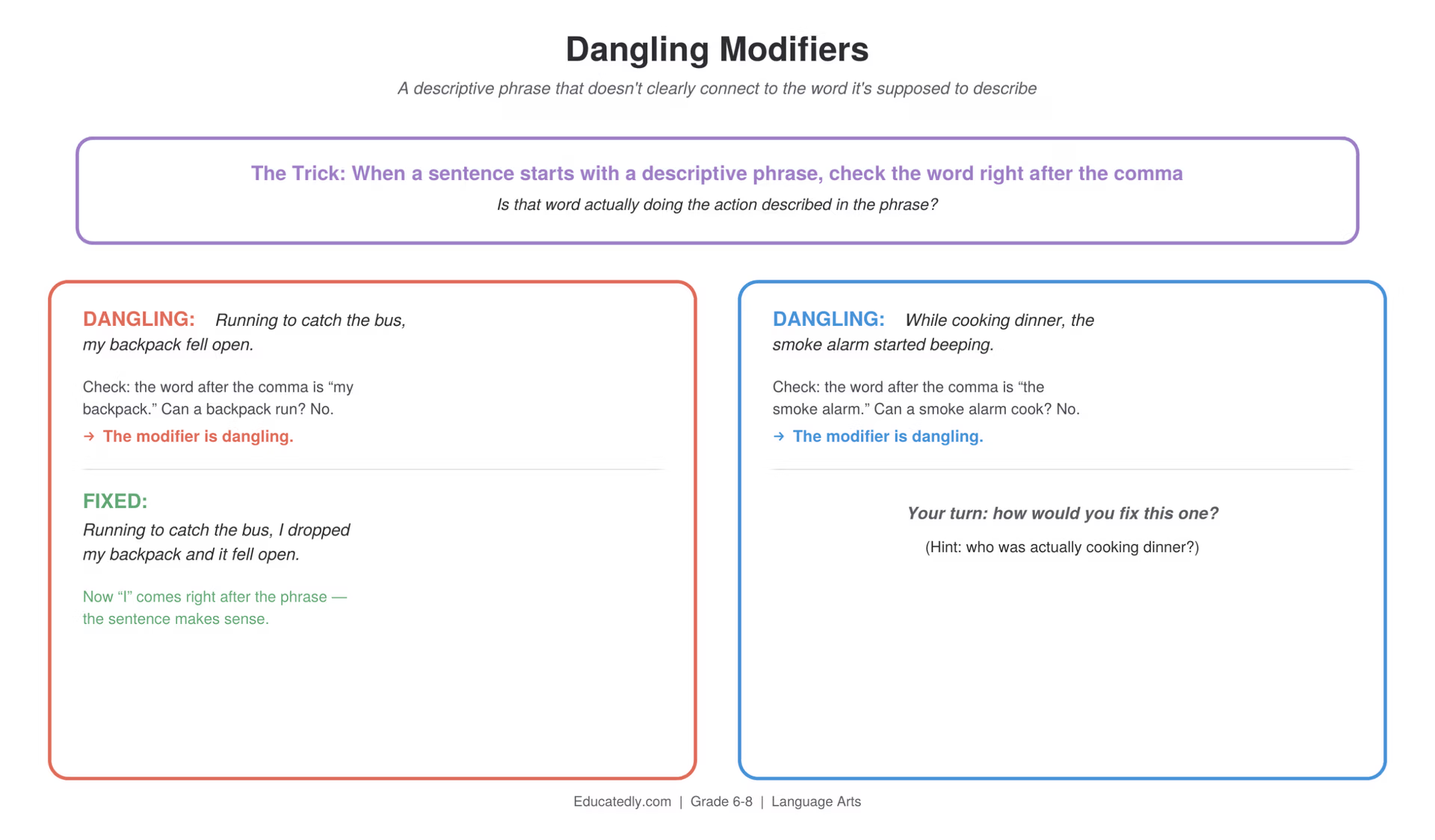
• Dangling Modifier: A descriptive phrase that does not clearly connect to the word it is supposed to describe.
• The Trick: When a sentence starts with a descriptive phrase, check the word right after the comma. Is that word actually doing the action?
• Fixing It: Rewrite the sentence so the word right after the descriptive phrase is the one actually doing the action.
Instructions: Read each question carefully and write your answer in the space provided.
1. A dangling modifier is a descriptive phrase that does not clearly connect to the word it is supposed to describe.
2. The word after the comma is “my backpack.” A backpack cannot run, so the modifier is dangling.
3. “Running to catch the bus, I dropped my backpack and it fell open.” Now “I” comes right after the phrase, so the sentence makes sense.
4. The word after the comma is “the smoke alarm,” and a smoke alarm cannot cook dinner.
5. Answers will vary — accept any sentence where a person (the one actually cooking) comes right after the phrase, such as “While cooking dinner, I heard the smoke alarm start beeping.”
Disclaimer: This worksheet was generated with AI assistance based on original video content. It is intended for educational reference only. Teachers are encouraged to review and adjust questions to fit their curriculum standards before classroom use.
🎯 Extension Activity: Write two of your own sentences with dangling modifiers, then trade with a partner. Use the trick from the video to find each other's dangling modifiers and fix them together.