
Contractions: Combining Two Words Into One
3-5
1
Teacher Note: Students can watch the video lesson above and answer the questions. Click the “Teacher Answer Key” dropdown below when you are ready to review the solutions!
Key Concepts:
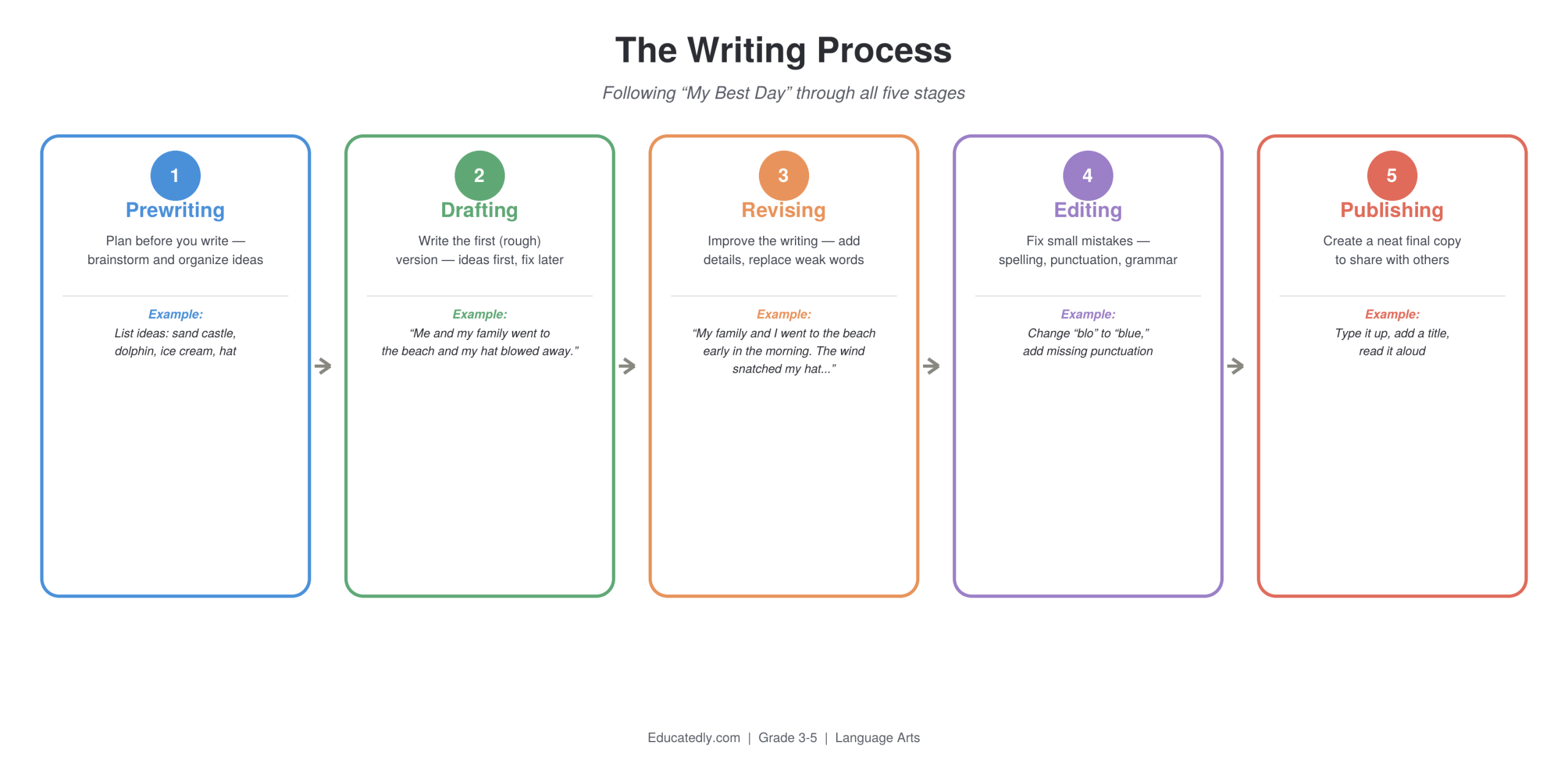
• Prewriting: Planning before you write — brainstorming and organizing ideas.
• Drafting: Writing the first, rough version, focusing on getting ideas down rather than fixing mistakes.
• Revising vs. Editing: Revising improves the writing itself (details, word choice, clarity); editing fixes small mistakes (spelling, punctuation, grammar).
• Publishing: Creating a neat final copy to share with others.
Instructions: Read each question carefully and write your answer in the space provided.
1. Prewriting, drafting, revising, editing, publishing.
2. Prewriting means planning before you write — brainstorming and organizing ideas. Example: listing ideas like sand castle, dolphin, ice cream, and windy hat.
3. Because drafting is about getting ideas down first; mistakes can be fixed later during revising and editing.
4. Revising improves the writing by adding details, replacing weak words, and making ideas clearer. Editing fixes small mistakes like spelling, punctuation, and grammar.
5. The writer creates a neat final copy to share — they may type their work, add a title, and read it to others.
Disclaimer: This worksheet was generated with AI assistance based on original video content. It is intended for educational reference only. Teachers are encouraged to review and adjust questions to fit their curriculum standards before classroom use.
🎯 Extension Activity: Pick a simple sentence you've written before (or write a new one) and take it through revising and editing, just like the "My Best Day" example. Write both the "before" and "after" versions.