
How to Write a World Leader Report
3-5
1
Teacher Note: Students can watch the video lesson above and answer the questions. Click the “Teacher Answer Key” dropdown below when you are ready to review the solutions!
Key Concepts:
• Colony: A place controlled by another country.
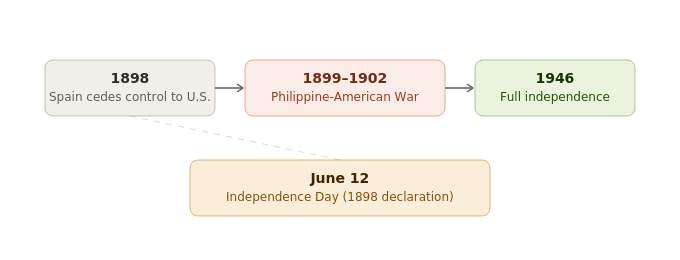
• Spanish-American War (1898): Ended Spanish control of the Philippines, but control transferred to the United States rather than independence.
• Philippine-American War (1899-1902): Filipino forces fought for independence, but the U.S. retained control.
• Full Independence (1946): The Philippines gained full independence from the United States on July 4, 1946.
Instructions: Read each question carefully and write your answer in the space provided.
1. Spain controlled the Philippines for over 300 years, until 1898.
2. The United States.
3. A war (1899-1902) in which Filipino forces fought for independence and self-rule, though the U.S. retained control.
4. July 4, 1946.
5. June 12 honors the original 1898 declaration of independence from Spain, not the 1946 independence from the United States.
Disclaimer: This worksheet was generated with AI assistance based on original video content. It is intended for educational reference only. Teachers are encouraged to review and adjust questions to fit their curriculum standards before classroom use.
🎯 Extension Activity: Have students create their own simple timeline (on paper or digitally) marking the four key dates from the video (1898, 1899-1902, 1946, and June 12 as the modern holiday), then write a one-sentence caption under each date explaining its significance.