
How to Write a Civil Rights Leader Report
3-5
1
Teacher Note: Students can watch the video lesson above and answer the questions. Click the “Teacher Answer Key” dropdown below when you are ready to review the solutions!
Key Concepts:
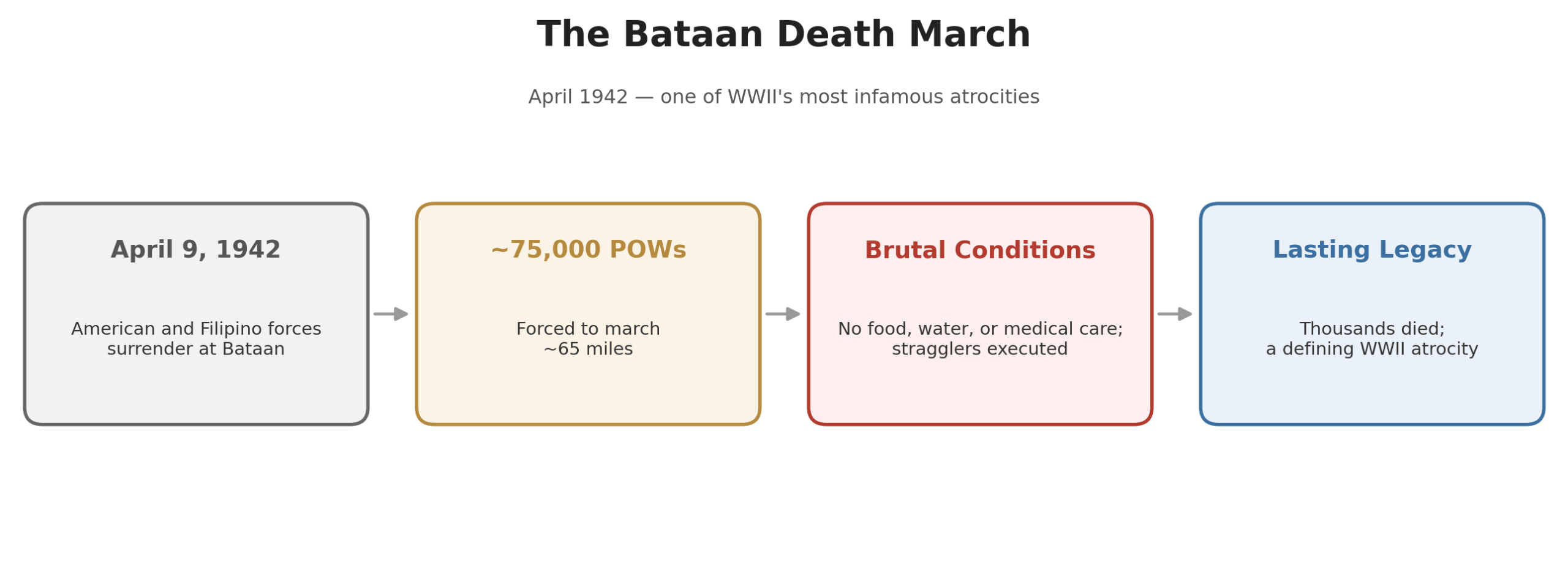
• The Surrender: On April 9, 1942, American and Filipino forces on the Bataan Peninsula surrendered to Japanese forces after months of fierce fighting.
• The March: Approximately 75,000 Filipino and American prisoners of war were forced to march roughly 65 miles to a prison camp.
• Brutal Conditions: Prisoners were denied adequate food, water, and medical care; those who fell behind were often executed.
• Its Legacy: Thousands died during the march and in the prison camps afterward, making it one of WWII’s most infamous atrocities and a violation of the laws of war.
Instructions: Read each question carefully and write your answer in the space provided.
1. April 9, 1942.
2. Approximately 75,000 prisoners, marched roughly 65 miles.
3. Scorching heat, and denial of adequate food, water, and medical care.
4. They were often executed on the spot — shot, bayoneted, or beheaded.
5. It involved the mistreatment and killing of prisoners of war, which international laws of war are meant to prevent.
6. Answers will vary — check for thoughtful reflection on remembrance, honoring victims, or understanding the human cost of war.
Disclaimer: This worksheet was generated with AI assistance based on original video content. It is intended for educational reference only. Teachers are encouraged to review and adjust questions to fit their curriculum standards before classroom use.
🎯 Extension Activity: Have students research and write a short profile of one survivor or unit involved in the Bataan Death March, focusing on what happened to them afterward, to connect the historical event to an individual human story.