
Checks and Balances: How the Three Branches Share Power
6-8
2
Teacher Note: Students can watch the video lesson above and answer the questions. Click the “Teacher Answer Key” dropdown below when you are ready to review the solutions!
Key Concepts:
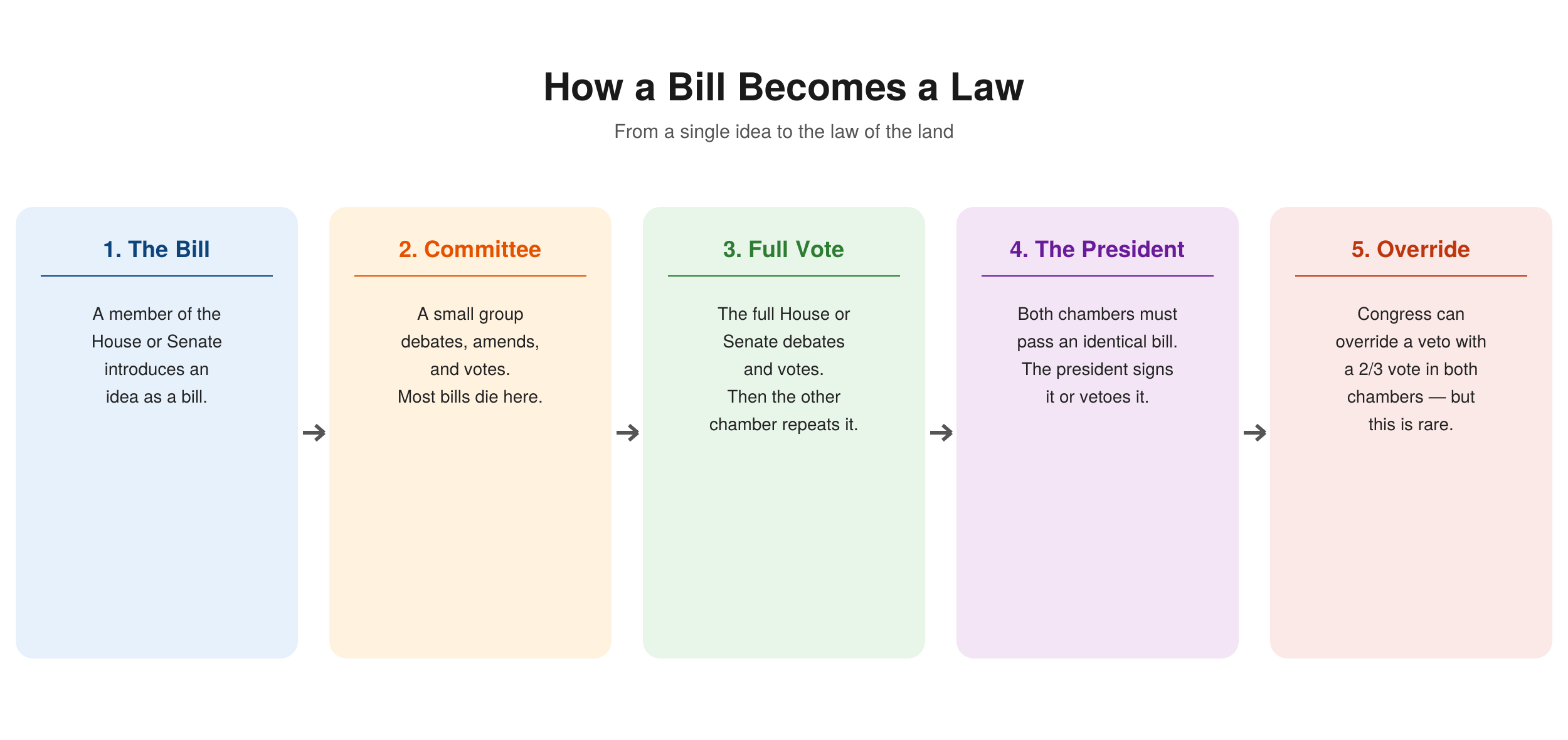
• Introduction: A member of the House or Senate introduces a bill.
• Committee: A small group debates, amends, and votes — most bills don’t survive this stage.
• Both Chambers: The House and Senate must both pass an identical version of the bill.
• The President: Can sign the bill into law or veto it, though Congress can override a veto with a two-thirds vote in both chambers.
Instructions: Read each question carefully and write your answer in the space provided.
1. Any member of the House or Senate
2. It is debated, amended, and voted on — most bills do not survive this stage
3. Because a bill must be approved in identical form by both chambers before it can go to the president
4. Sign it into law, or veto it
5. With a two-thirds vote in both chambers; it is rare because reaching that level of agreement is difficult
Disclaimer: This worksheet was generated with AI assistance based on original video content. It is intended for educational reference only. Teachers are encouraged to review and adjust questions to fit their curriculum standards before classroom use.
🎯 Extension Activity: Have students pick an idea they'd like to see become a law and write a short paragraph tracing it through each of the five steps, from introduction to a possible presidential veto.