
Checks and Balances: How the Three Branches Share Power
6-8
2
Teacher Note: Students can watch the video lesson above and answer the questions. Click the “Teacher Answer Key” dropdown below when you are ready to review the solutions!
Key Concepts:
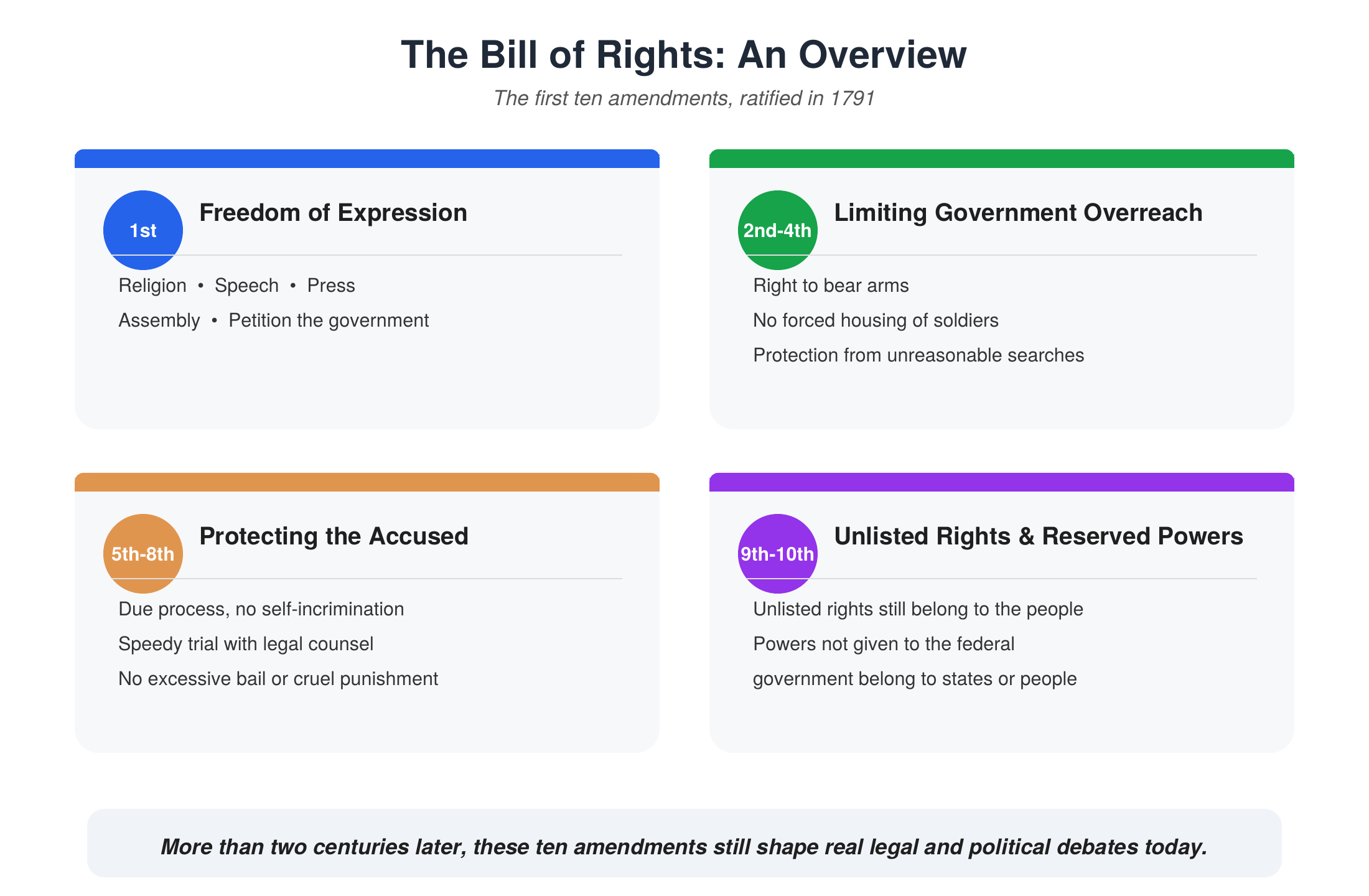
• The Bill of Rights: The first ten amendments to the U.S. Constitution, ratified together in 1791 to limit government power and protect individual liberties.
• First Amendment: Protects five freedoms — religion, speech, press, assembly, and the right to petition the government.
• Amendments 2-4: Limit government and law enforcement authority — the right to bear arms, protection from forced housing of soldiers, and protection from unreasonable searches and seizures.
• Amendments 5-8: Protect people accused of crimes, including due process, a speedy trial with legal counsel, and protection from excessive bail or cruel punishment.
• Amendments 9-10: State that unlisted rights still belong to the people, and powers not given to the federal government belong to the states or the people.
Instructions: Read each question carefully and write your answer in the space provided.
1. 1791; it was added to limit the new federal government and prevent overreach into individual liberties.
2. Religion, speech, press, assembly, and the right to petition the government.
3. The Fourth Amendment.
4. Any two: due process, protection against self-incrimination, protection against double jeopardy, a speedy public trial, right to legal counsel, protection from excessive bail or fines, protection from cruel and unusual punishment.
5. The Ninth Amendment states that rights not written down are still retained by the people; the Tenth Amendment states that powers not given to the federal government are reserved for the states or the people.
6. Answers will vary; accept any reasonable response referencing ongoing legal cases (e.g., free speech, search and seizure) that still rely on these amendments.
Disclaimer: This worksheet was generated with AI assistance based on original video content. It is intended for educational reference only. Teachers are encouraged to review and adjust questions to fit their curriculum standards before classroom use.
🎯 Extension Activity: Find a recent news story that connects to one of the amendments in this lesson (free speech, search and seizure, jury trials, etc.). Explain which amendment applies and why.