
Converting Between Fahrenheit and Celsius: A Step-by-Step Guide
6-8
2
Teacher Note: Students can watch the video lesson above and answer the questions. Click the “Teacher Answer Key” dropdown below when you are ready to review the solutions!
Key Concepts:
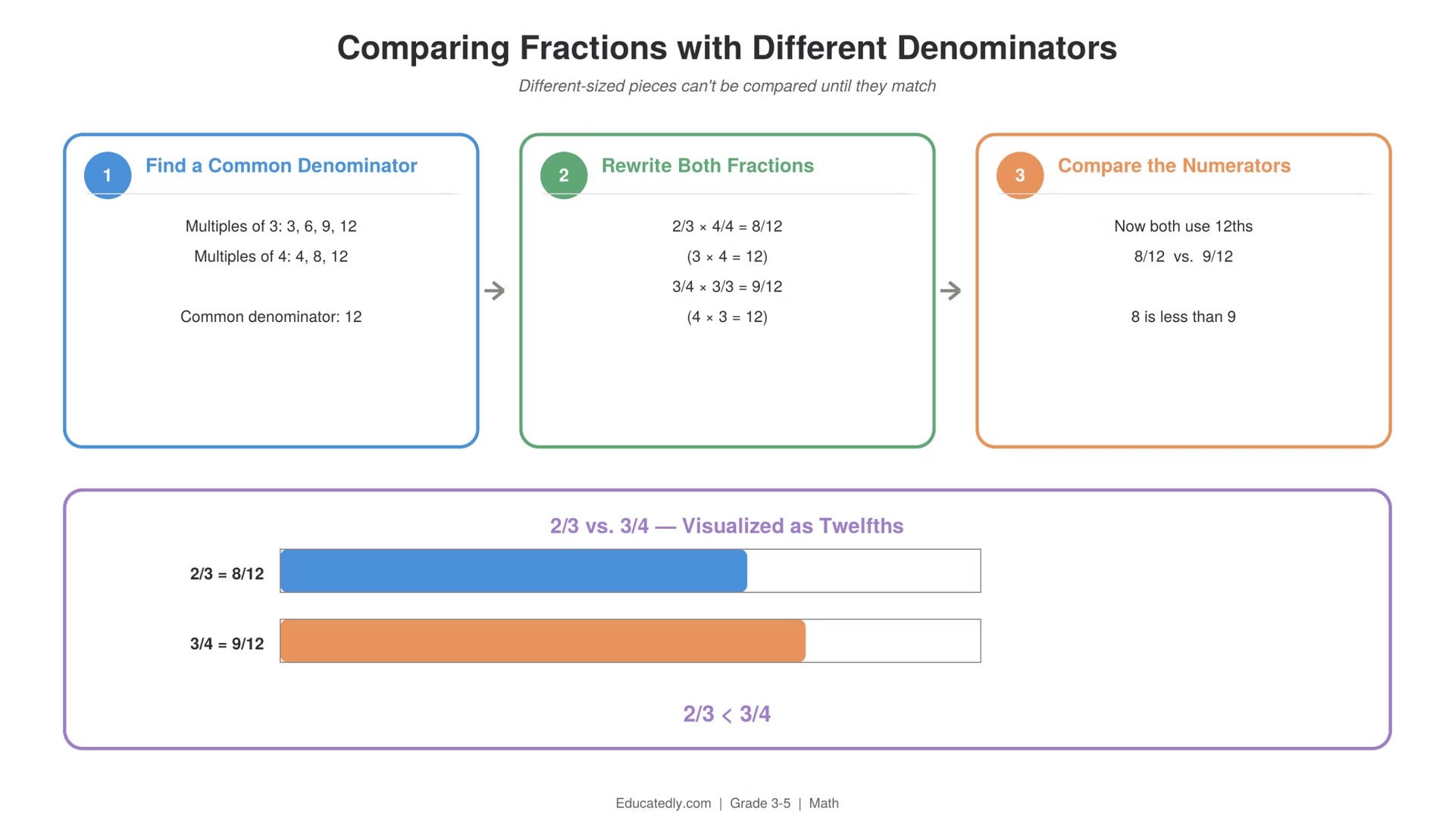
• Why It Matters: Fractions with different denominators have different-sized pieces, so you cannot compare just the numerators.
• Step 1 & 2: Find a common denominator using multiples, then rewrite both fractions as equivalent fractions with that denominator.
• Step 3: Once both fractions have the same denominator, compare the numerators — the larger numerator means the larger fraction.
Instructions: Read each question carefully and write your answer in the space provided.
1. Because thirds and fourths are different-sized pieces, so the numerators alone don’t tell you which fraction is bigger.
2. Multiples of 3: 3, 6, 9, 12. Multiples of 4: 4, 8, 12. The common denominator is 12.
3. 2/3 × 4/4 = 8/12. 3/4 × 3/3 = 9/12.
4. 9/12 is greater than 8/12.
5. 2/3 is less than 3/4.
Disclaimer: This worksheet was generated with AI assistance based on original video content. It is intended for educational reference only. Teachers are encouraged to review and adjust questions to fit their curriculum standards before classroom use.
🎯 Extension Activity: Compare 3/5 and 5/8 by finding a common denominator, rewriting both fractions, and comparing the numerators. Show every step.