
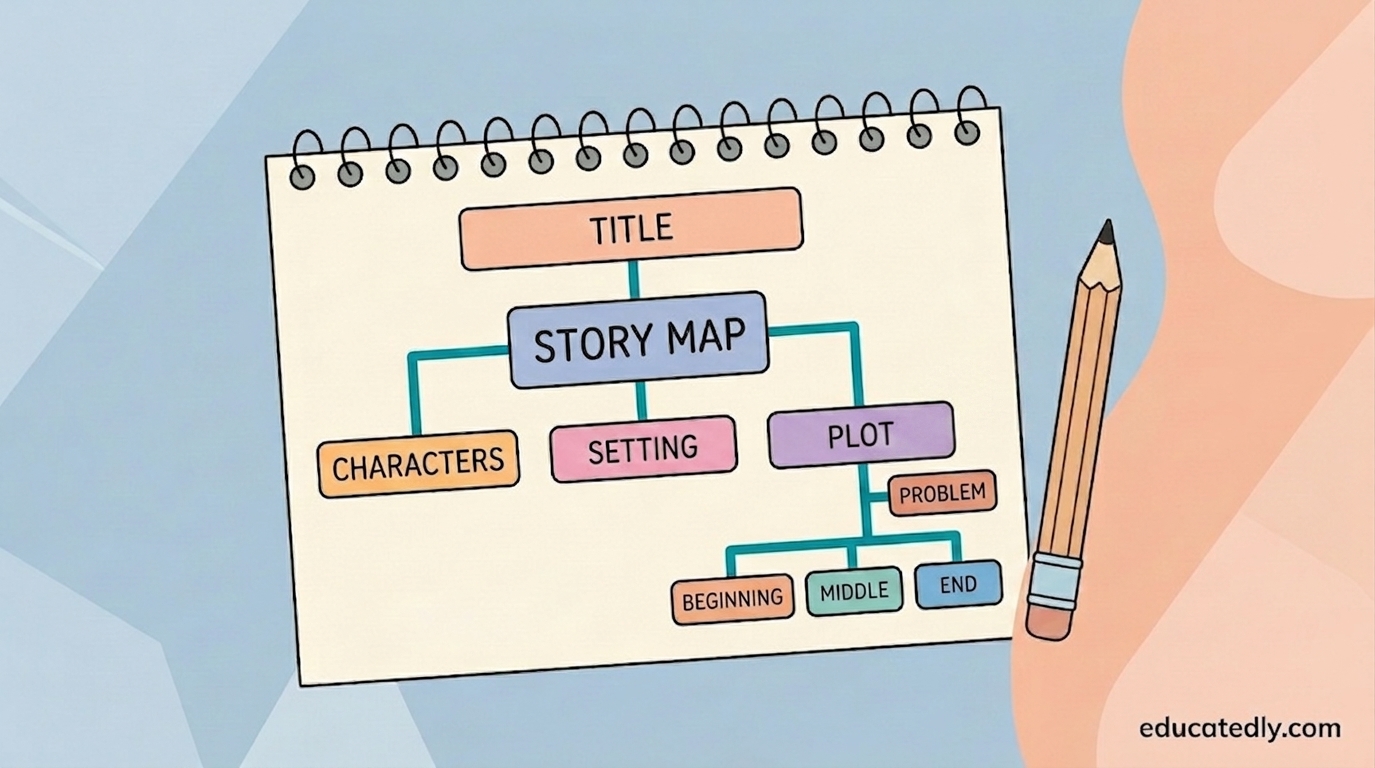
Getting students to organize their thoughts before they write is one of those steps that’s easy to skip when time is tight — but it’s also one of the biggest levers for turning a messy first draft into a clear one. Our Graphic Organizer Generator makes that step fast: pick a type, fill it in right in the browser, print or save as PDF, done.
Here’s a quick look at all six organizers and where each one fits:
1. Story Map (Grades K-5, adaptable up)
Perfect before creative writing or reading response assignments — plot, characters, setting, all mapped out before the first sentence gets written.
2. Persuasive / Opinion Essay Outline (Grades 3-8)
Great for structuring an argument before drafting — claim, reasons, evidence, all in order.
3. Compare & Contrast (Grades 2-8)
A natural fit any time students are comparing two things — two characters, two historical events, two scientific processes.
4. Sequence / Process Chart (Grades K-5)
Useful for anything with a clear order: steps in a science experiment, stages of a life cycle, or the sequence of events in a story.
5. Main Idea & Supporting Details Web (Grades 2-6)
Good for reading comprehension work — pulling the central idea out of a passage and backing it up with specific details.
6. Five-Paragraph Essay Outline (Grades 6-12)
The classic structure for longer, more formal writing assignments — introduction, three body paragraphs, conclusion.
How it works in practice:
Students (or you, for a class template) fill in Name, Date, and Topic/Title, work through the organizer’s fields, then either Print/Save as PDF to turn it in, or Copy to paste their work into another document to continue drafting from there.
One thing worth knowing: nothing typed into the tool is saved anywhere — not even on Educatedly’s own servers. If you want to reuse a blank template for future classes, print a copy before anyone starts typing.
Give it a try: Graphic Organizer Generator

