
Converting Between Fahrenheit and Celsius: A Step-by-Step Guide
6-8
2
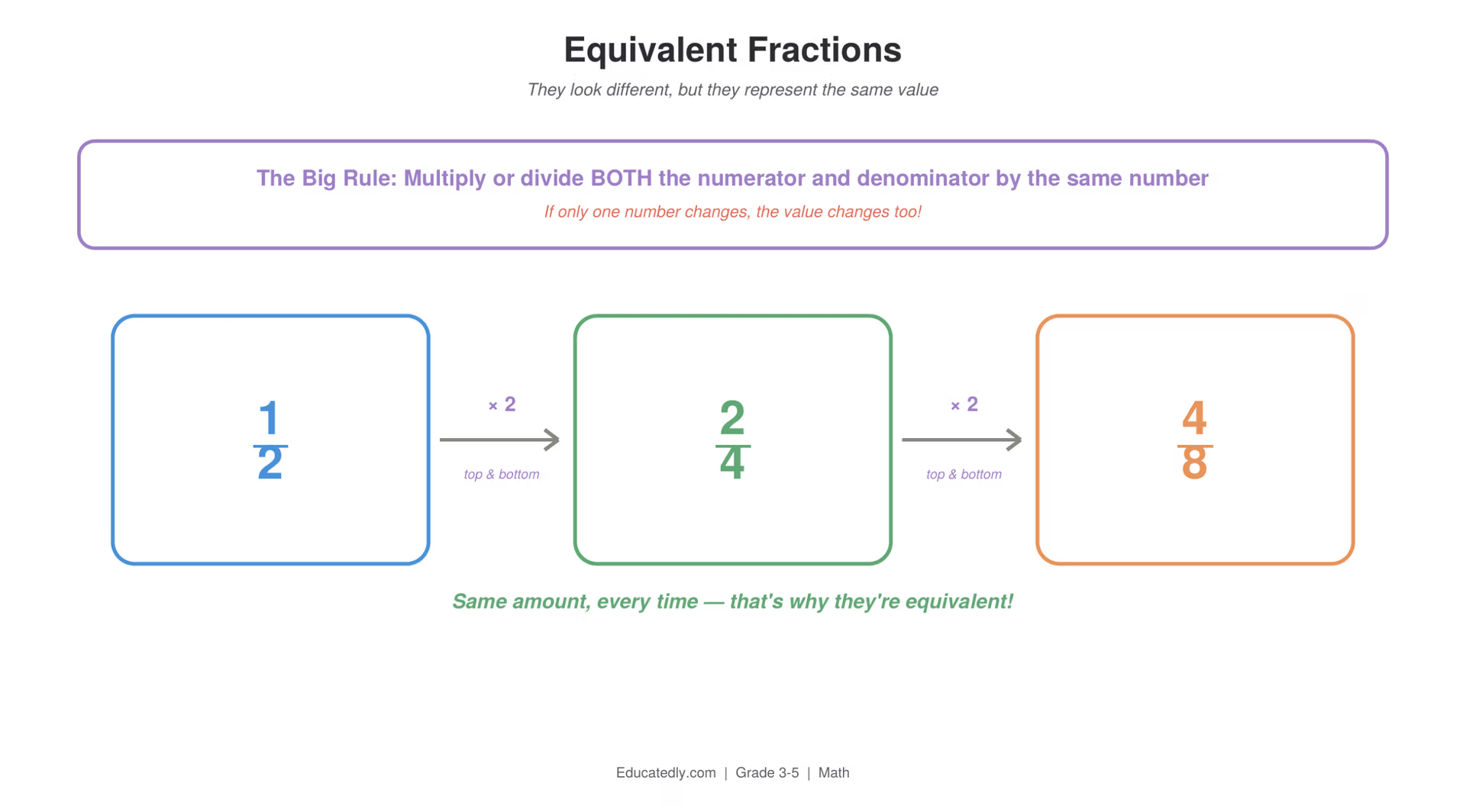
Teacher Note: Students can watch the video lesson above and answer the questions. Click the “Teacher Answer Key” dropdown below when you are ready to review the solutions!
Key Concepts:
• Equivalent Fractions: Fractions that look different but represent the same value.
• The Big Rule: You must multiply or divide both the numerator and denominator by the same number.
• One-Sided Changes: If only one number changes (just the numerator or just the denominator), the value of the fraction changes too.
• Checking Equivalence: If both numbers were multiplied (or divided) by the same amount, the fractions are equivalent.
Instructions: Read each question carefully and write your answer in the space provided.
1. Equivalent fractions look different but represent the same value.
2. You must multiply or divide both the numerator and denominator by the same number.
3. 2/4.
4. 4/8.
5. Because it changes how many pieces you have without changing how many pieces make up the whole, which changes the actual amount the fraction represents.
Disclaimer: This worksheet was generated with AI assistance based on original video content. It is intended for educational reference only. Teachers are encouraged to review and adjust questions to fit their curriculum standards before classroom use.
🎯 Extension Activity: Starting with 1/3, multiply the numerator and denominator by 2, then by 2 again, to create a chain of three equivalent fractions. Show your work at each step.