
Converting Between Fahrenheit and Celsius: A Step-by-Step Guide
6-8
2
Teacher Note: Students can watch the video lesson above and answer the questions. Click the “Teacher Answer Key” dropdown below when you are ready to review the solutions!
Key Concepts:
• Place Value: In 347, the 3 is hundreds, the 4 is tens, and the 7 is ones.
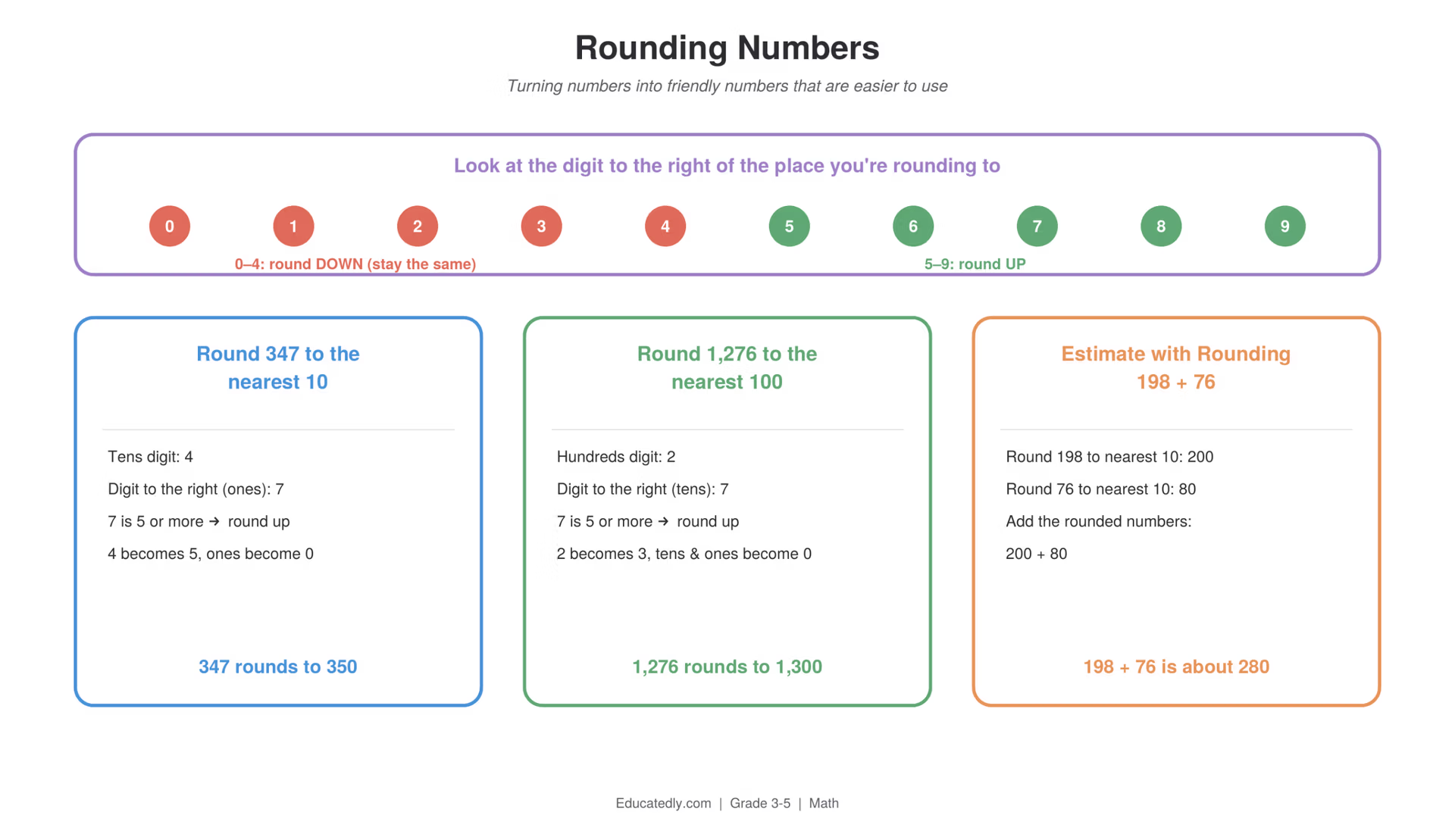
• The Rounding Rule: Look at the digit to the right of the place you’re rounding to. If it’s 5 or more, round up. If it’s less than 5, round down (stay the same).
• Rounding to a Place: When you round up or down, all digits to the right of the rounded digit become zero.
• Estimating with Rounding: Rounding numbers first makes addition problems easier to estimate.
Instructions: Read each question carefully and write your answer in the space provided.
1. Look at the digit to the right of the place you’re rounding to. If it’s 5 or more, round up. If it’s less than 5, round down (stay the same).
2. The tens digit is 4; the ones digit (7) is 5 or more, so round up. 347 rounds to 350.
3. The hundreds digit is 2; the tens digit (7) is 5 or more, so round up. 1,276 rounds to 1,300.
4. 198 rounds to 200; 76 rounds to 80. 200 + 80 = 280.
5. Rounding turns numbers into “friendly numbers” that are easier to add quickly, giving a close estimate without needing the exact sum.
Disclaimer: This worksheet was generated with AI assistance based on original video content. It is intended for educational reference only. Teachers are encouraged to review and adjust questions to fit their curriculum standards before classroom use.
🎯 Extension Activity: Round 523 to the nearest 10 and 2,841 to the nearest 100. Then estimate 289 + 154 by rounding each number to the nearest 10 before adding. Show every step.