
Opportunity Cost
6-8
1
Teacher Note: Students can watch the video lesson above and answer the questions. Click the “Teacher Answer Key” dropdown below when you are ready to review the solutions!
Key Concepts:
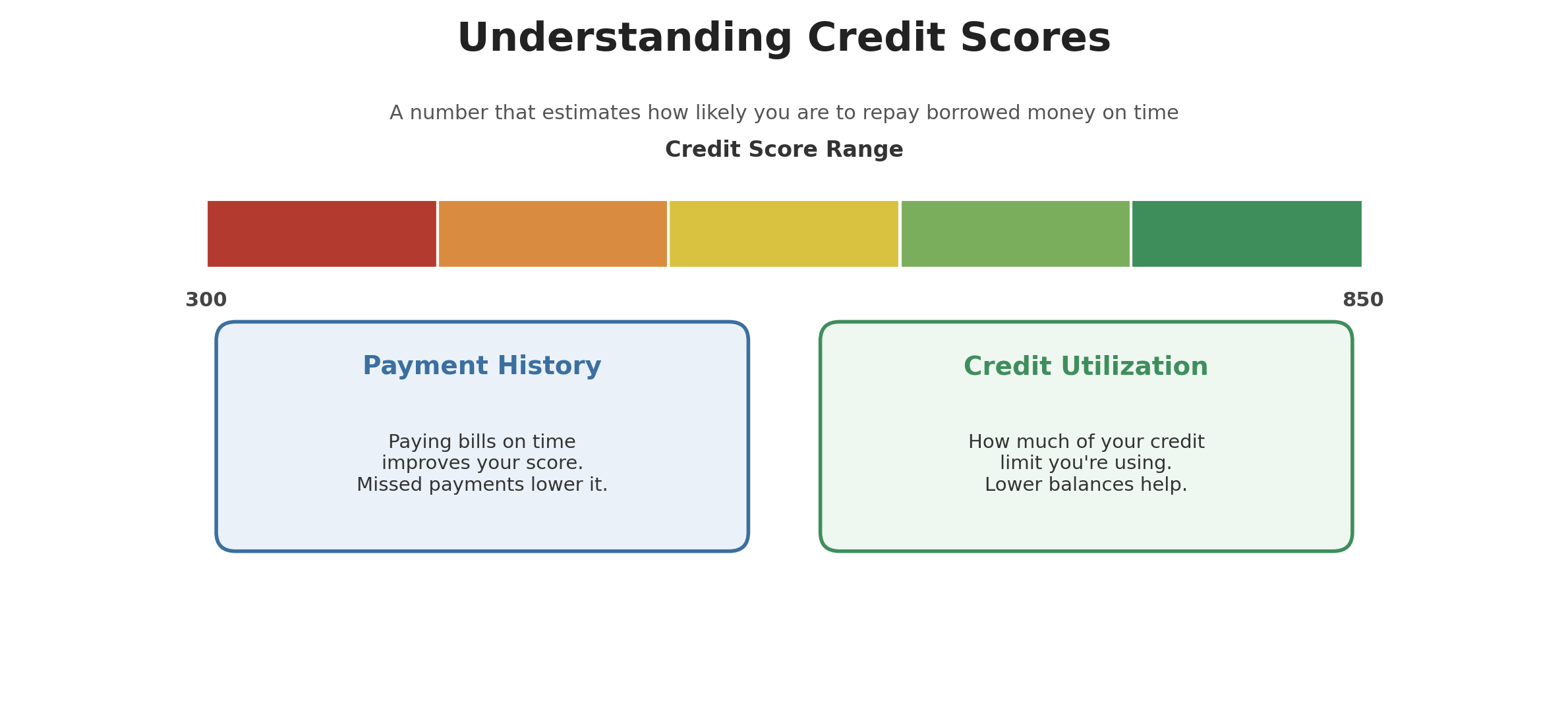
• Credit Score: A number that estimates how likely someone is to repay borrowed money on time, generally ranging from 300 to 850.
• Payment History: Paying bills on time improves your score; missed or late payments lower it.
• Credit Utilization: How much of your available credit you’re using — lower balances relative to your limit help your score.
Instructions: Read each question carefully and write your answer in the space provided.
1. How likely someone is to repay borrowed money on time.
2. 300 to 850.
3. Any two of: car loans, apartments, credit cards, phone plans.
4. Your score can improve.
5. High utilization (90%) — that’s bad for your score.
6. A lower balance means you’re using less of your available credit, which signals lower risk to lenders and helps your score.
Disclaimer: This worksheet was generated with AI assistance based on original video content. It is intended for educational reference only. Teachers are encouraged to review and adjust questions to fit their curriculum standards before classroom use.
🎯 Extension Activity: Give students 4 short scenarios (e.g., "Maria pays every bill on time but maxes out her one credit card" / "Jake has a $500 limit and owes $50") and have them predict whether each scenario would help or hurt a credit score, and why.