
Opportunity Cost
6-8
1
Teacher Note: Students can watch the video lesson above and answer the questions. Click the “Teacher Answer Key” dropdown below when you are ready to review the solutions!
Key Concepts:
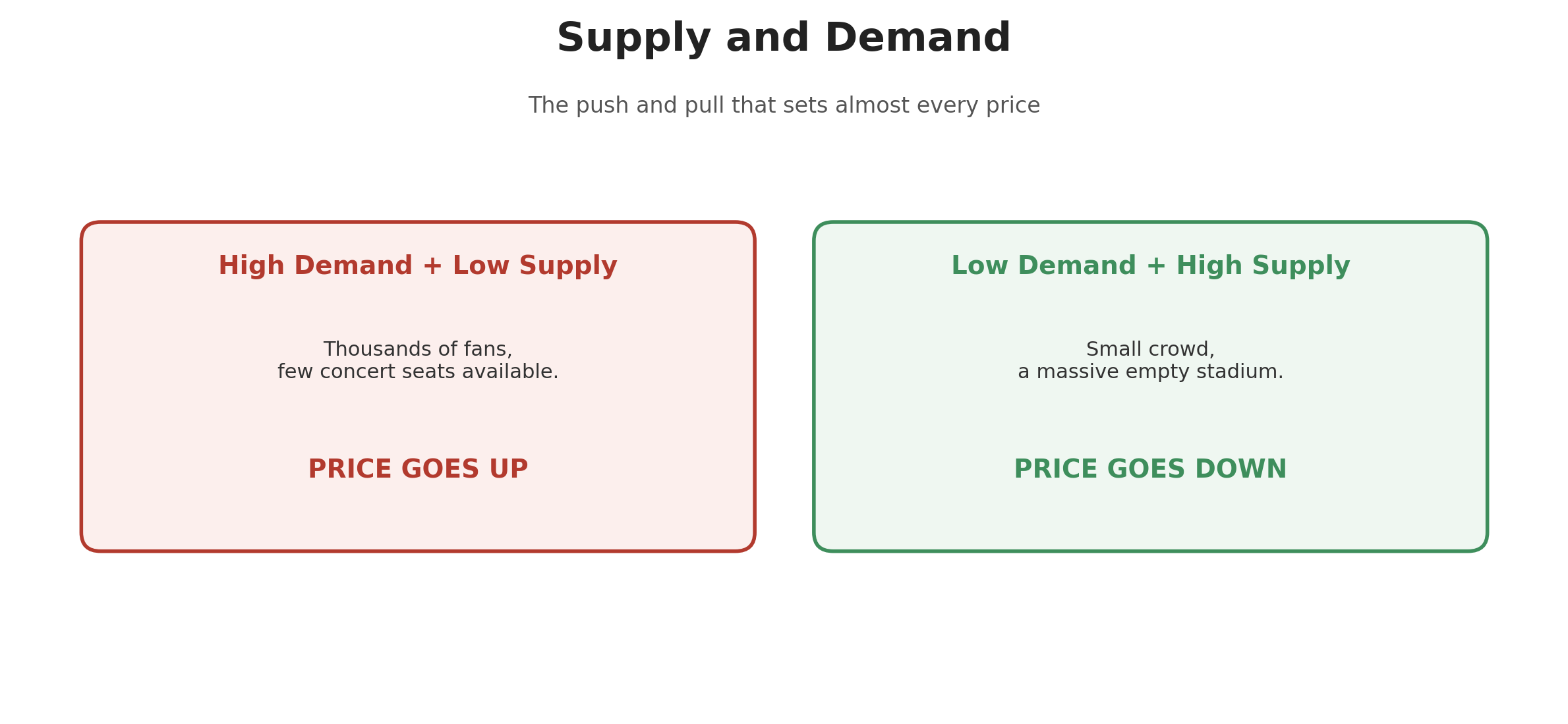
• Demand: How many people want something.
• Supply: How much of that thing actually exists.
• The Rule: When demand is high and supply is low, prices rise. When supply is high and demand is low, prices fall.
Instructions: Read each question carefully and write your answer in the space provided.
1. Demand is how many people want something; supply is how much of it actually exists.
2. High demand (thousands of fans) and low supply (limited seats) — people were willing to pay more to get one of the few spots.
3. The supply of seats was huge but demand from fans was small, so prices had to drop to fill the stadium.
4. “Too many buyers chasing too few goods.”
5. The price would likely go up, since demand is high and supply is low.
6. Answers will vary — check that the example correctly identifies which side (supply or demand) was high or low and how that affected price.
Disclaimer: This worksheet was generated with AI assistance based on original video content. It is intended for educational reference only. Teachers are encouraged to review and adjust questions to fit their curriculum standards before classroom use.
🎯 Extension Activity: Give students 4 scenarios (e.g., "a food truck is the only one at a festival with 5,000 people" / "10 ice cream shops on the same block on a slow Tuesday") and have them predict whether prices would rise or fall in each, explaining which side — supply or demand — is driving the change.