
Earth’s Hidden Layers: What’s Inside Our Planet?
3-5
2
Teacher Note: Students can watch the video lesson above and answer the questions. Click the “Teacher Answer Key” dropdown below when you are ready to review the solutions!
Key Concepts:
• Cell Theory: All living things are made of cells.
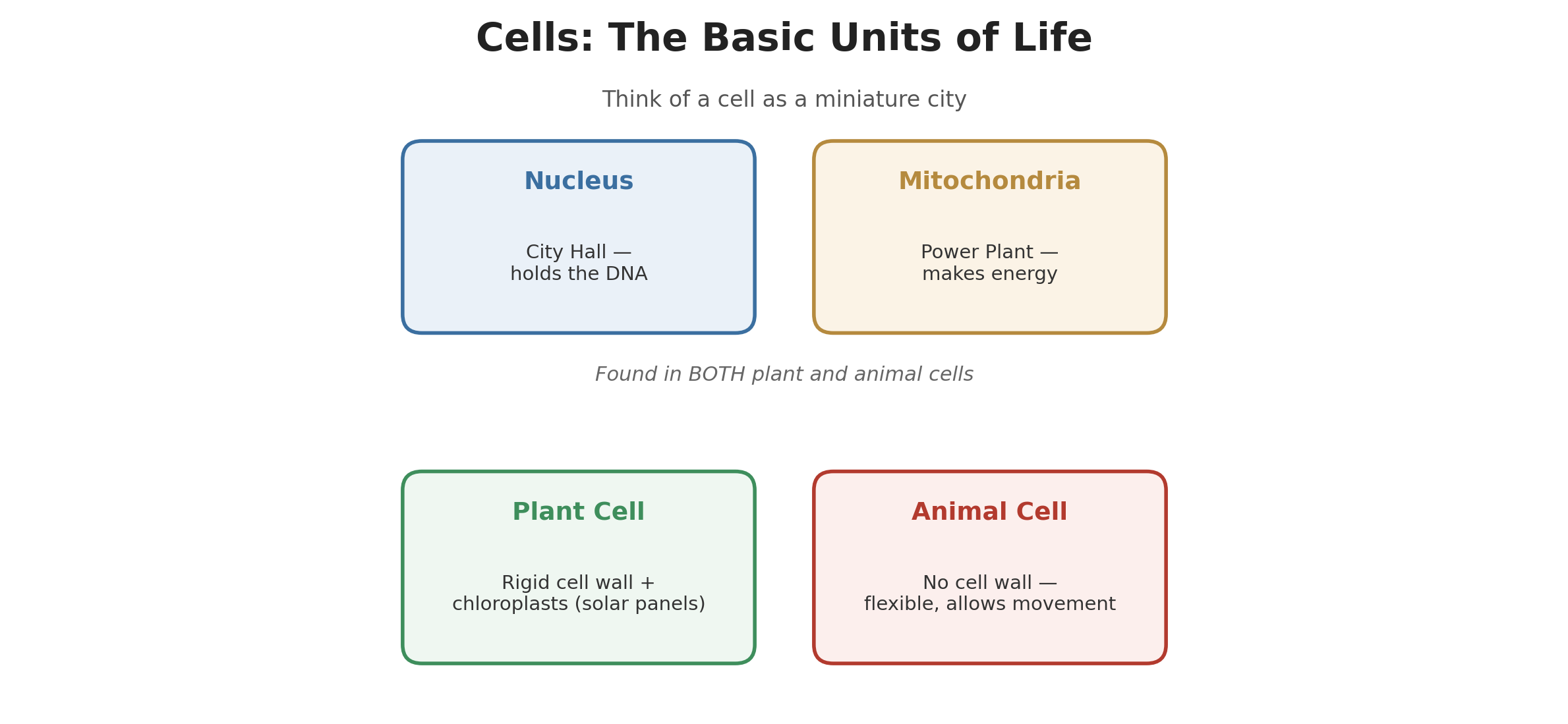
• Nucleus: The control center of the cell, holding the DNA (like “city hall”).
• Mitochondria: Converts food into energy for the cell (like a “power plant”).
• Plant vs. Animal Cells: Plant cells have a rigid cell wall and chloroplasts for making food; animal cells are more flexible and lack both.
Instructions: Read each question carefully and write your answer in the space provided.
1. All living things are made of cells.
2. It holds the DNA and tells the cell what to do; the video compares it to “city hall.”
3. They convert food into energy to power the cell.
4. The cell wall.
5. Special structures (“solar panels”) that let plant cells make their own food.
6. A cell wall or chloroplasts (either answer is correct).
Disclaimer: This worksheet was generated with AI assistance based on original video content. It is intended for educational reference only. Teachers are encouraged to review and adjust questions to fit their curriculum standards before classroom use.
🎯 Extension Activity: Have students draw and label a plant cell and an animal cell side by side, using their own city-themed analogy for at least two organelles.